7 Ways to Make Your Wardrobe Work Harder Before Buying More Clothes
Most men who tell me they need more clothes already own plenty.
Their closets aren’t empty. They’re usually filled with shirts, pants, jackets, and shoes accumulated over years.
And yet, when an important dinner, meeting, trip, date, presentation, or media appearance lands on the calendar, the first thought is:
I need something new.
Usually, that isn’t true.
The problem isn’t necessarily a lack of clothes. It’s that the clothes aren’t working together to produce enough usable outfits.
A closet stores clothing. A wardrobe should create options.
If yours only works for a small corner of your life—or you keep wearing the same three combinations while everything else sits untouched—you don’t need to begin with another shopping trip.
You need to figure out why the wardrobe you own isn’t doing more.
These seven practical fixes will help.
1. Build Around Your Automatic Yes
Start with the clothes you reach for without thinking.
The navy pants that always feel right. The jacket that makes you look pulled together immediately. The shoes you trust when you don’t have time to experiment.
These pieces are already telling you something important.
Maybe the fit works well for your build. Maybe the color connects easily to the rest of your closet. Maybe the level of formality fits the way you actually live.
Don’t simply notice that you like the piece. Use it as a starting point.
Choose one favorite and create two additional outfits around it.
For example, a pair of navy trousers might work with:
- A dress shirt and blazer for a meeting
- A knit polo and suede jacket for dinner
- A sweater and elevated sneaker for travel or the weekend
Now those pants aren’t part of one successful outfit. They’re part of a repeatable formula.
When you understand why your automatic yes works, you can look for those same qualities in other pieces. That makes future shopping more precise and getting dressed much easier.
2. Give Your Unworn Clothes a Decision
Most closets contain a group of clothes living in limbo.
You don’t wear them, but you don’t get rid of them either.
Instead, they stay there quietly taking up space—and occasionally making you feel guilty.
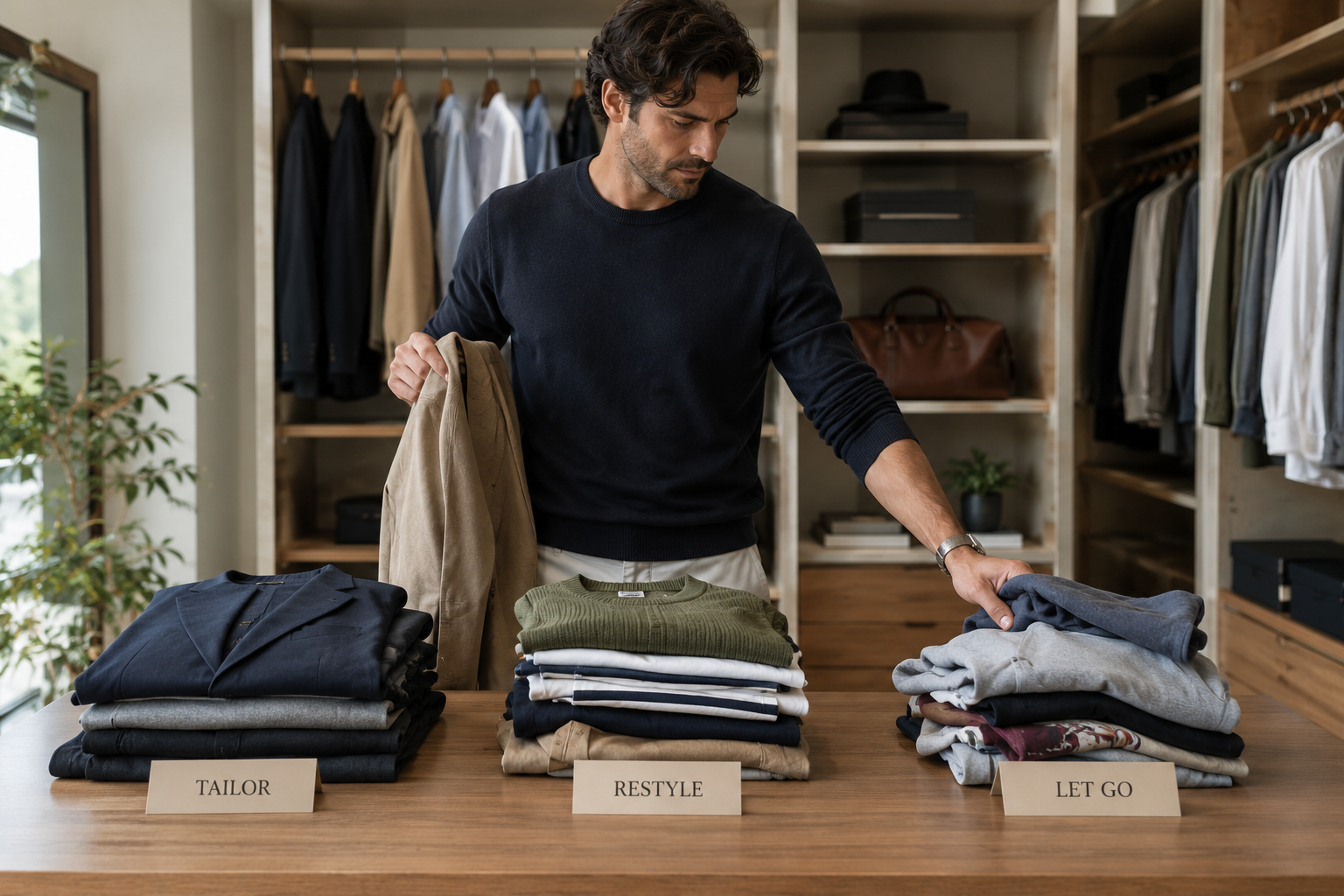
Pull out five pieces you haven’t worn in the past year. Put each one into one of three categories:
Tailor it
The shoulders work, but the body is too loose. The pants are good, but the break is wrong. The sleeve length makes the entire jacket look off.
If fit is the problem and the piece is worth saving, take it to the tailor. Don’t put it back with the vague intention of handling it someday.
Style it differently
Maybe the piece is good, but you don’t know how to connect it to what you own.
Build a complete outfit around it now. Try different shoes, pants, layers, or levels of formality. If one missing connector piece would make it useful, add that specific item to your shopping list.
Let it go
Some clothes belong to a body, career, lifestyle, or identity you no longer have.
Keeping them doesn’t make your wardrobe more complete. It makes the useful part harder to see.
Make the decision, then take the action: schedule the tailoring, create the outfit, or remove the piece.
Not wearing something is information. Use it.
3. Break Up Your Usual Outfits
Most men have a few outfits they wear as complete sets.
The same jacket always goes with the same shirt. The same trousers always get the same shoes. The pieces work, but they’re rarely separated and used anywhere else.
That habit makes your wardrobe feel smaller than it is.
Choose one outfit you wear regularly and break it apart. Take each piece and build a different combination around it.
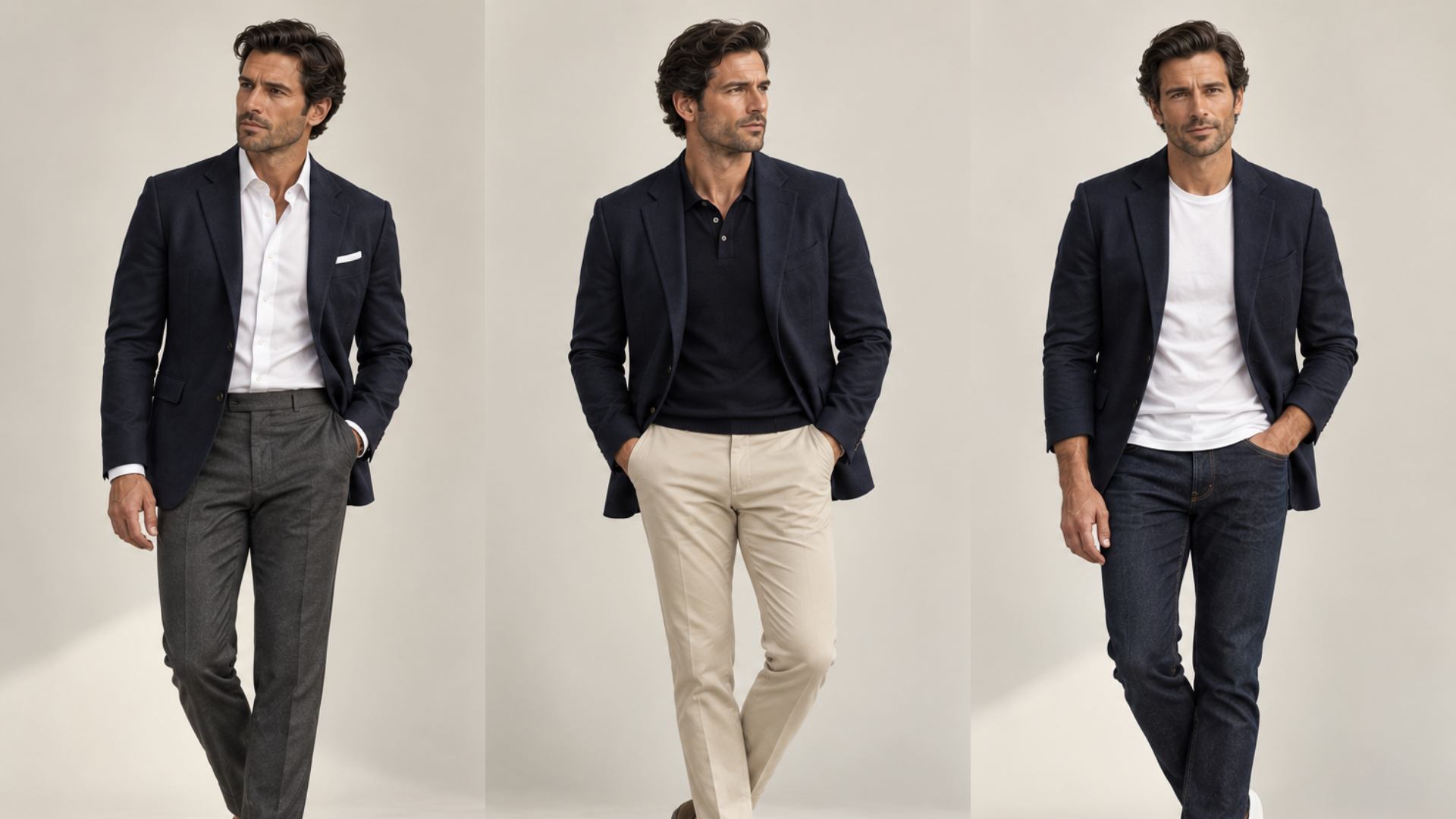
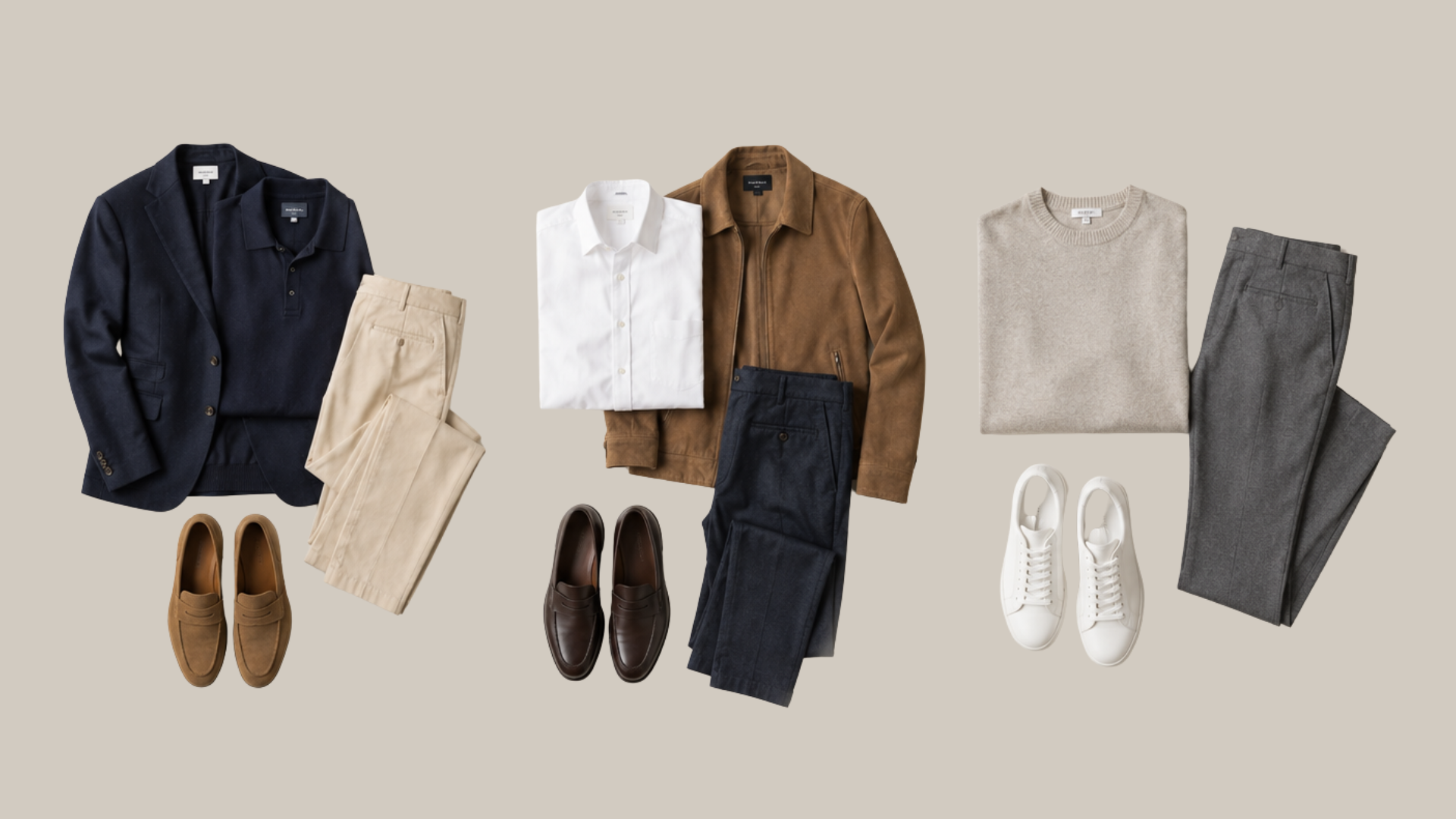
For example, if you normally wear a navy blazer with a white button-up and grey trousers:
- Wear the navy blazer with a knit polo and dark denim.
- Pair the white shirt with chinos and a suede jacket.
- Try the grey trousers with a lightweight sweater and clean sneakers.
One familiar outfit has now helped create three more.
You can do the same thing with your casual clothes. The overshirt you always wear with jeans might work with chinos. The polo you reserve for shorts may look great under a jacket with trousers. The sneakers you think of as weekend shoes may be refined enough for a relaxed business-casual outfit.
The goal isn’t to force together pieces that don’t belong. It’s to stop treating successful combinations like permanent sets.
When every shirt, pant, jacket, and shoe only has one assigned partner, you technically own plenty of clothes—but you still have very few options.
Separating those pieces and recombining them is one of the fastest ways to uncover the range already sitting in your closet.
4. Put One “Special” Piece Into Regular Rotation
Many men divide their closets into two categories:
The everyday clothes that are worn constantly and the better clothes being saved for something important.
The suede jacket stays covered. The expensive shoes remain in the box. The good sweater is reserved for a dinner that apparently needs to submit an application first.
Meanwhile, the most tired pieces in the closet handle everyday life.
Choose one thing you’ve been saving and wear it this week.
The easiest way to make a special piece feel more natural is to pair it with something more casual.
Wear the suede jacket with a T-shirt and dark denim. Put the polished loafer with chinos and a knit polo. Wear the better sweater with jeans rather than waiting to put it under a sport coat.
You’re not overdressing. You’re raising the level of an ordinary outfit.
Your wardrobe should support the important moments, but it should also improve the way you show up on a normal Tuesday.
If your best clothes never enter your actual life, they aren’t doing their job.
5. Change One Variable When an Outfit Feels Flat
An outfit can be perfectly acceptable and still feel forgettable.
This is where many men overcorrect. They assume they need an entirely different outfit—or that looking more interesting means adding several things at once.
Usually, one intentional change is enough.
Try changing:
- The basic sneaker to a suede loafer or refined boot
- The button-up shirt to a knit polo
- The lightweight jacket to one with more texture
- The predictable color combination to a tonal one
- The dress trouser to a dark, clean jean
- The crewneck sweater to a quarter-zip or collared knit
You aren’t reinventing yourself. You’re adjusting one variable.
This also helps one outfit move between different situations.
A dress shirt, trousers, and sport coat may work for business. Replace the dress shirt with a knit polo and the same foundation becomes appropriate for dinner. Swap the trousers for dark denim and it moves into the weekend.
One or two changes can create an entirely different read without requiring an entirely different wardrobe.

6. Photograph the Outfits That Work
When you put on an outfit and immediately know it works, take a photo.
Not for Instagram. For yourself.
Create a private album on your phone and save the combinations that make you feel current, comfortable, and appropriately dressed.
Once you have 10 to 15 photos, look for repetition.
Perhaps your strongest outfits consistently include:
- A casual jacket over a simple shirt
- Tonal or low-contrast color combinations
- Dark pants with a lighter layer on top
- Texture instead of pattern
- Clean footwear with minimal contrast
- One polished element paired with something relaxed
Now you have more than a collection of outfit photos. You have a personal formula.
Repeat the structure using different clothes.
If a knit polo, trouser, and casual jacket repeatedly work for you, create additional versions of that combination. Change the colors, materials, and formality while keeping the framework.
You don’t need a completely original idea every morning. You need a few strong formulas that you know how to adjust.
That is how getting dressed starts moving toward autopilot.
7. Make One Piece Work in Two Parts of Your Life
A wardrobe becomes more useful when its pieces can cross over.
Instead of mentally dividing your closet into work clothes, weekend clothes, date clothes, travel clothes, and event clothes, look for ways to connect those categories.
Take one item you normally wear in only one context and style it for another.
For example:
- Wear your business blazer with dark denim and a knit polo for dinner.
- Pair your dress trousers with a sweater and clean sneaker.
- Put your suede jacket over a button-up instead of a T-shirt.
- Wear your elevated overshirt with chinos rather than casual jeans.
- Use your refined travel sneaker with relaxed tailoring.
- Dress down a suit jacket—if it can truly work separately—with denim or a five-pocket pant.
Not every piece needs to go everywhere. A tuxedo doesn’t need to prove itself at brunch.
But the foundational pieces in your wardrobe should offer more than one use.
The more crossover you create, the less often you’ll feel compelled to buy a new outfit for every new occasion.
Why Do I Have Plenty of Clothes but Nothing to Wear?
If you own plenty of clothing but still feel as though you have nothing to wear, the usual causes are:
- Too many similar pieces doing the same job
- Clothes purchased individually instead of as part of a wardrobe
- Poor fit or unfinished tailoring
- Pieces bought for isolated occasions
- Missing connectors such as the right shoe, layer, or pant
- Clothes that no longer reflect your current life
- No repeatable outfit formulas
The solution is not automatically to buy more. First, identify what is preventing your existing clothes from working together.
What Makes a Men’s Wardrobe Versatile?
A versatile men’s wardrobe contains pieces that can be combined in multiple ways and adjusted for different settings.
The goal is not to make every item work for every occasion. It’s to create enough intentional crossover that your wardrobe can support work, weekends, travel, dinners, events, and appearances without each category requiring a separate collection of clothes.
That comes from choosing the right fit, a connected color story, appropriate levels of formality, and pieces that can be dressed up or down.
Do I Need to Replace My Entire Wardrobe?
Probably not.
Even wardrobes that feel disconnected usually contain several strong pieces worth keeping. The first step is to identify what works, correct what can be tailored or restyled, remove what no longer serves you, and then shop specifically for what will connect the wardrobe.
Replacing everything without that clarity can leave you with a newer version of the same problem.
Build a Wardrobe That Can Make Outfits
A full closet is not the goal.
A useful wardrobe is.
One that reflects who you are now. One that supports how you want to be perceived. One that can move between the different parts of your life without demanding another shopping trip every time something hits your calendar.
We don’t build outfits.
We build a wardrobe that can make outfits.
One life. One wardrobe. Lots of range.
If your closet contains plenty of clothes but still leaves you unprepared, that is exactly what we solve inside The Men’s Edit.
Together, we evaluate what you own, define the direction, fill the right gaps, and build a foundational wardrobe with enough range to support your actual life.
About Dina Cerchione
Dina Cerchione is a men's personal stylist and wardrobe expert with nearly 30 years of experience styling for television, entertainment and private clients. Her work focuses on the intersection of identity, presence and perception and helping men build wardrobes that match who they are, where they're going and how they want to show up.