Are Expensive Clothes Worth It? The Real Return on a Better Wardrobe
Let me ask you something.
What's the most expensive piece of clothing in your closet?
Now, when was the last time you actually wore it?
If you have to think about that second question for more than a few seconds, we might have a problem.
Somewhere along the way, we started calling expensive clothing investment pieces.
The $1,200 jacket. The designer sneakers. The beautiful cashmere sweater you had to convince yourself was worth the money.
And listen, I love beautiful clothes. I appreciate incredible fabrics, excellent construction, and a perfectly tailored jacket probably more than most people.
It's literally been my business for over 30 years.
But here's something I wish more men understood:
Just because something costs a lot of money doesn't mean it's adding a lot of value to your life.
And there's a big difference.
Are expensive clothes actually an investment?
Usually, but not in the financial sense.
Unless you're buying rare, collectible pieces with an established resale market, most clothes aren't going to appreciate in value.
That expensive jacket isn't earning interest while it hangs in your closet.
And those designer sneakers aren't paying dividends.
But that doesn't mean spending money on your wardrobe is a waste.
It means we need to rethink what we're actually investing in.
The investment isn't really in the clothes. It's in the person wearing them.
Think about it.
You don't buy a great jacket simply to own a great jacket. You buy it because of how you look and feel when you're wearing it. Maybe you stand a little taller. Maybe you feel more comfortable walking into a room full of people you don't know. Maybe you stop wondering whether you're dressed appropriately and get on with whatever you're there to do.
The clothes haven't changed who you are.
But they can change how you carry yourself, and that can influence how other people experience you.
That's a return worth paying attention to.
A high price tag doesn't buy you personal style
One of the biggest misconceptions about dressing well is that having more money automatically makes it easier.
It certainly gives you more choices.
But choices aren't the same as knowing what to do with them.
You can walk into a luxury department store, spend $5,000, and leave with some very beautiful things.
That doesn't mean those things work together.
It doesn't mean they flatter your body.
And it certainly doesn't mean you're going to know what to wear when you're standing in front of your closet next Saturday night.
I've worked with guys who own incredible clothes but repeatedly wear the same five outfits.
Sound familiar?
They buy individual pieces they like without thinking about the bigger picture.
Another jacket. Another pair of jeans. Another navy sweater. Maybe one more pair of shoes because these are slightly different from the other six pairs.
And somehow, with every new purchase, the closet gets fuller but getting dressed doesn't get any easier.
You can own a $3,000 jacket and still look like you're wearing somebody else's clothes.
The proportions are wrong. The pants don't work. The shoes are an afterthought.
So, instead of feeling great in this new purchase, you're uncomfortable and wondering whether you made the right choice.
Meanwhile, the guy next to you might be wearing a $200 jacket, perfectly fitted, with the right trousers and shoes.
He looks terrific. And more importantly, he knows it.
More expensive clothes don't fix a wardrobe that doesn't have a plan. They just make the problem more expensive.
What makes clothing worth the money?
For me, it comes down to a few things that have surprisingly little to do with the label.
1. It actually makes you look AND feel better
This should be obvious, but apparently it needs to be said by someone without a filter :)
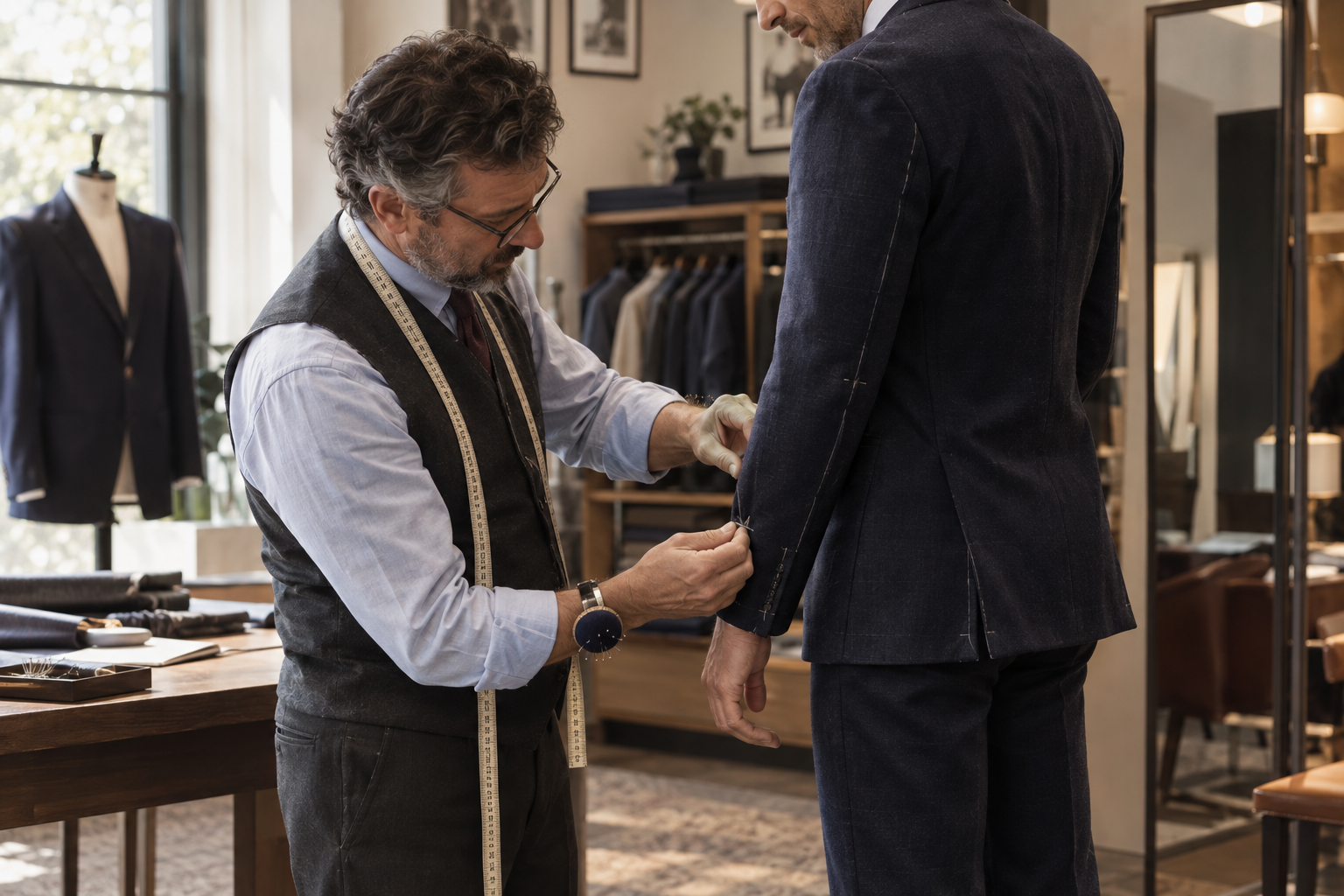
A $200 jacket that fits your shoulders, flatters your build, and works with your proportions will do more for you than a $2,000 jacket that doesn't. Period, end of story.
Fit isn't a luxury. It's THE starting point.
When your clothes fit properly, you're not constantly adjusting them or worrying about how you look from the side.
You feel comfortable in your own skin, and that's reflected in how you move and carry yourself.
And sometimes tailoring is a smarter investment than buying something new.
2. It works with what you already own
Before you buy something, ask yourself:
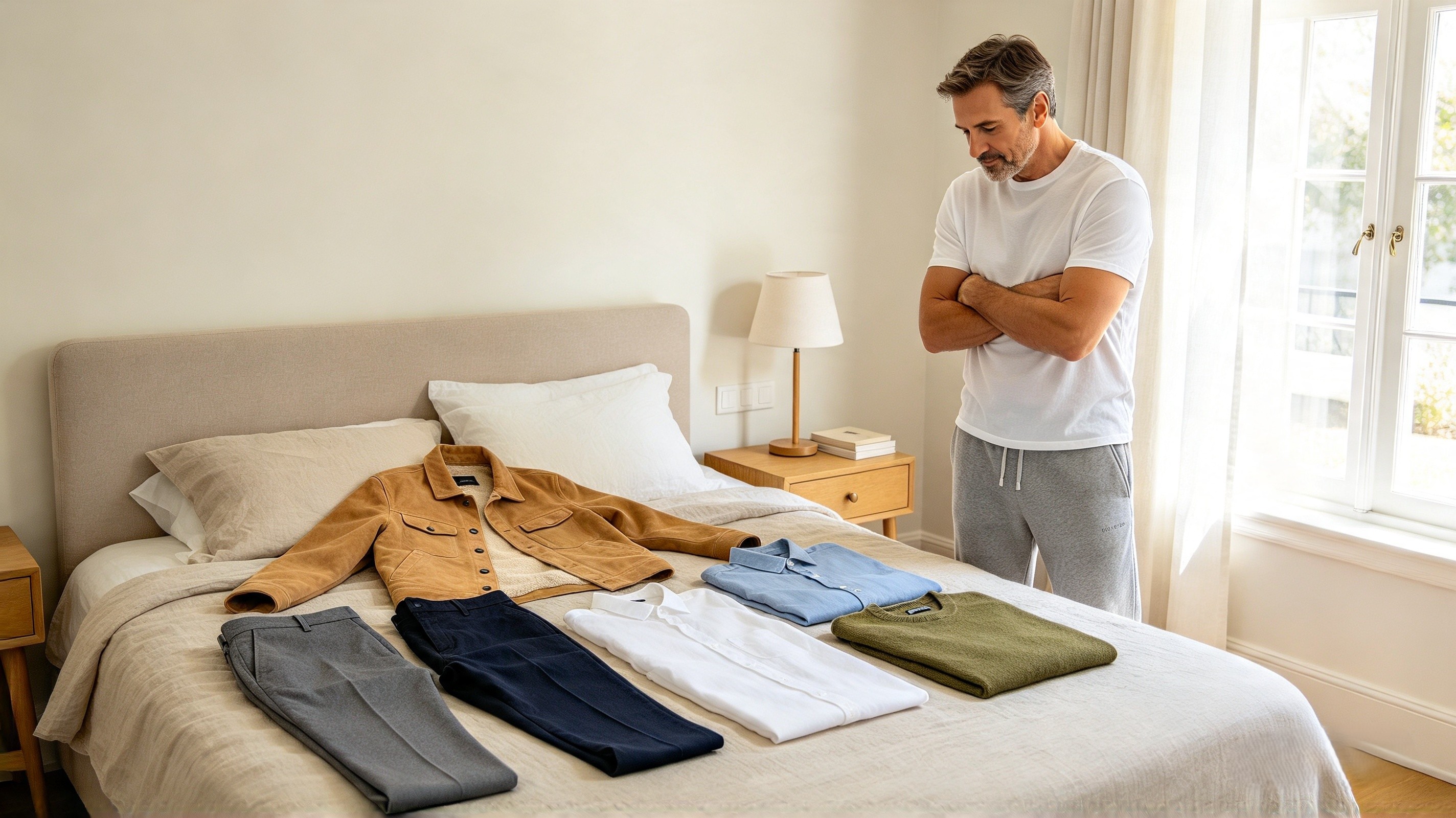
Can I make at least three great outfits with this?
Not three outfits that are technically possible.
Three outfits you'd actually be excited to wear.
If you need a new shirt, new pants, and new shoes just to make that jacket work, it's no longer a $700 purchase.
It's the beginning of a much bigger shopping trip.
And those rarely go according to plan.
A wardrobe that works together also gives you more choices about how you want to present yourself.
You can look relaxed on a weekend, polished for a meeting, or appropriately dressed for a great dinner without having to reinvent the wheel every time.

3. It has a place in your actual life
I see this with men all the time.
They own plenty of clothes for the life they rarely live and not nearly enough for the life they live every day.
Beautiful suits but nothing interesting for dinner.
A closet full of casual clothes but no idea what to wear to a speaking engagement or an important client meeting.
Or the opposite: a wardrobe of polished business clothes that doesn't translate to weekends, travel, or dates.
A smart wardrobe reflects your real schedule.
Not the fantasy version of it.
And when your wardrobe actually supports the different parts of your life, you can walk into those situations feeling prepared rather than wondering whether you got it right.
4. You actually wear it
This one might be the most important.
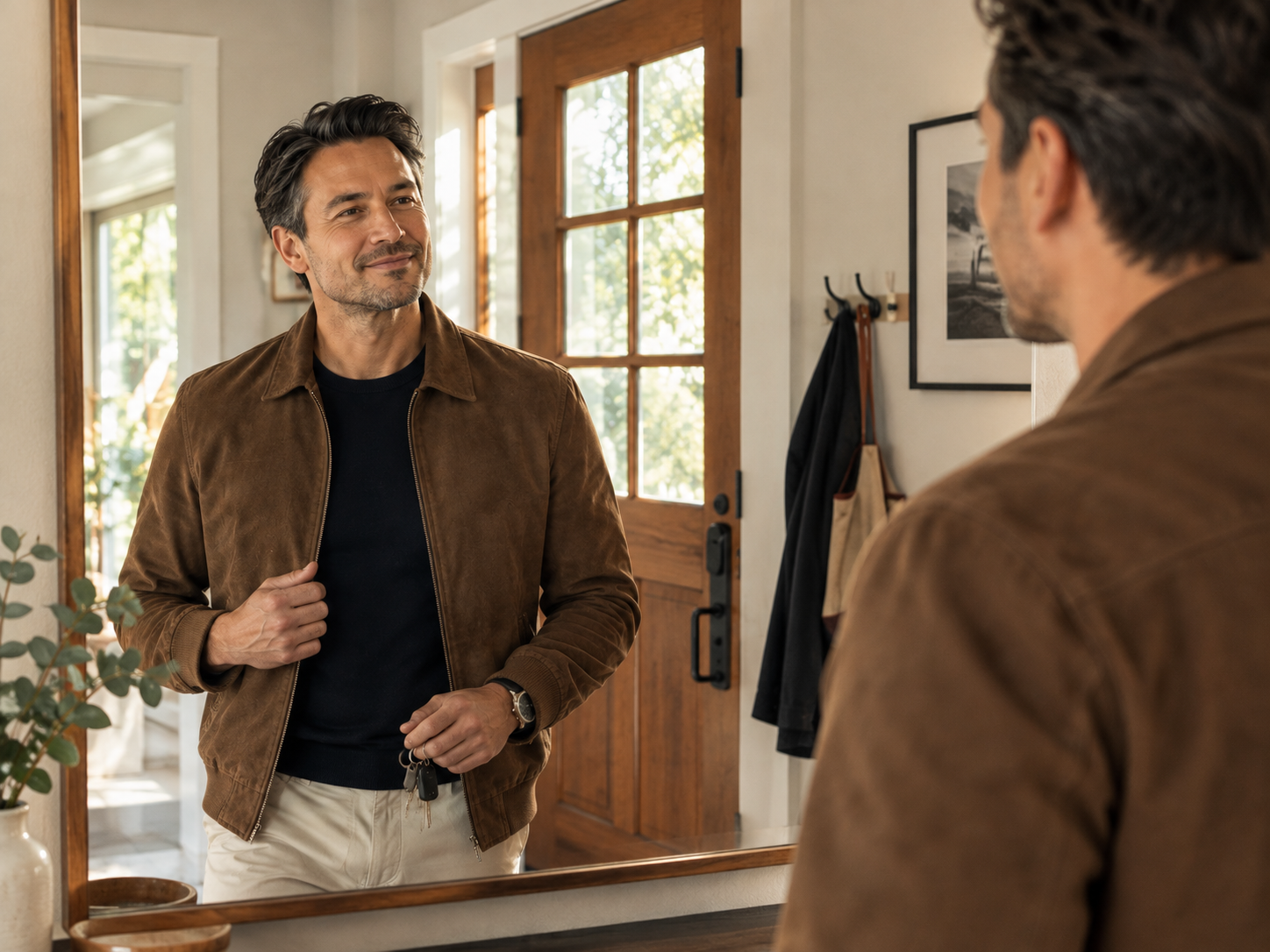
A $300 jacket you wear constantly can be far more valuable than a $1,500 jacket you pull out twice a year.
I'm not suggesting you wear everything until it falls apart.
I'm suggesting that the things you spend good money on deserve to be worn.
Stop treating your closet like a museum.
Clothes are meant to be lived in.
And if you've got something beautiful hanging in your closet that makes you feel fantastic, why on earth are you saving it?
Wear the thing.
The real return is in the man wearing the clothes
Now we're getting to the interesting part.
Think about the difference between two mornings.
On the first, you're standing in front of your closet, trying on three shirts, wondering whether the pants look right, changing your shoes twice, and eventually leaving the house in something you've worn a hundred times because at least you know it works.
On the second, you put on an outfit you know fits, looks good, and is appropriate for where you're going.
You're dressed in five minutes.
You like what you see.
And then you go about your day.
You're not tugging at your jacket.
You're not wondering whether you look underdressed.
You're not thinking about your clothes at all.
That's the return my clients experience.
Because what you wear doesn't just affect how you see yourself. It plays a part in how other people see you.
People notice when a man looks put together.
They notice when his clothes fit, when the choices seem intentional, when he looks comfortable in what he's wearing.

They may not consciously analyze any of it, but those details contribute to the impression he makes.
And they certainly don't need to know what he spent.
Does a great jacket guarantee you'll win the client, land the job, or get the date?
Of course not.
But feeling good in what you're wearing can change the way you approach those situations.
You're not preoccupied with your appearance or lack thereof. You're more present, more comfortable, more in control and free to focus on the things that actually matter.
That's a much better return than having the most expensive jacket in the room.
Before you buy another 'investment piece,' do this
Here's a little exercise for you.
Go into your closet and pull out the three most expensive pieces you own.
For each one, ask:
- When did I last wear this?
- Does it fit me properly today?
- Can I create three different outfits with it?
- Does it work for the places I actually go?
- How do I feel when I'm wearing it?
- Would I buy it again, knowing how much I've worn it?
If you love the piece but never wear it, figure out why.
Maybe it needs tailoring. If so, fix it.
Maybe you haven't learned how to style it. Take the time to do so.
Maybe the rest of your wardrobe doesn't support it. Hmmm, does it actually belong in your closet then or is it that everything else is not right? One of them is off.
Or maybe it was never the right purchase in the first place. That's okay. But learn from it before you spend another dollar.
And if you discover that your most expensive pieces are also your least useful, you've just learned something important about how you've been shopping.
So, is it worth spending more money on clothes?
Absolutely, when there's a reason to.
I'm a big believer in investing in quality where it matters.
Excellent shoes. Well-cut trousers. Great outerwear. Knitwear that holds its shape. Pieces that fit properly and can be worn in multiple ways.
But I'm an even bigger believer in knowing what you're buying and why.
Sometimes that means spending $1,500 on something exceptional.
Sometimes it means buying something for $150 and having it tailored.
And sometimes the smartest move is not buying anything at all.
Because at the end of the day, you're not trying to win an award for the most expensive closet.
You're trying to look great when you walk out the door.
To be comfortable walking into a room, whether it's a business meeting, a dinner party, or a first date.
To look like you put some thought into yourself, because you did.
And to spend less time worrying about your clothes and more time enjoying your life.
The goal isn't to own the most expensive wardrobe in the room. It's to have one that works so well you don't have to think about it.
That's something worth investing in.
A few questions I hear from men
Is expensive clothing always better quality?
No. Higher prices can and should reflect better fabrics, construction, and craftsmanship, but they can also reflect branding and exclusivity. Judge each piece by its fit, materials, construction, and usefulness never just the label.
How do I know if a piece of clothing is worth the money?
Consider how often you'll wear it, whether it fits properly, how many outfits you can create with it, and whether it suits your actual lifestyle. And don't discount how you feel when you're wearing it. A high price can be justified when a piece delivers long-term usefulness.
Should I buy fewer, better clothes?
Often, yes. But better doesn't necessarily mean more expensive. It means buying intentionally, choosing pieces that work together, and building a wardrobe around how you really live.
After more than 30 years styling men for television, entertainment, and real life, I've learned that a great wardrobe isn't about how much you own or how much you've spent.
It's about knowing what works for you, and having the confidence to wear it.
That's exactly what I help men figure out through The Men's E.D.I.T.—taking what you already own, identifying what's missing, and building a wardrobe that makes getting dressed easier and a whole lot more satisfying.
About Dina Cerchione
Dina Cerchione is a Men's Style Expert with more than 30 years of experience styling for television and entertainment. She helps men develop personal style and build wardrobes that work for their bodies, lifestyles, and goals.