How to Build a Wardrobe That Actually Works for Your Life
I've been buying and styling clothes for men for 30 years.
For television. For appearances. For executives and entrepreneurs. For men who need to walk onto a stage and men who’s stage is their local tavern and they just want to stop staring into their closet every Saturday night wondering what the hell they're supposed to wear.
And yes, I'm looking at all the things. Fit, color, proportion, fabrication, quality and price.
But before I buy a client anything, I need to understand something much more basic:
Where is this man actually going?
Because one of the biggest mistakes men make when building a wardrobe is buying individual pieces they like without considering whether those clothes actually fit their lifestyle.
That's how you end up with a closet full of perfectly good clothes and somehow still have nothing to wear.
A good men's wardrobe isn't necessarily a big wardrobe. It's a wardrobe built around the places you actually go, the level of formality those situations require and how you want to show up when you get there.
That's where I start and where you should start too.
Why Do Men Have So Many Clothes but Nothing to Wear?
Usually, it's not because you don't own enough. It's because what you do own doesn't match what you need.
Walk into a store and it's easy to buy something because you like it.
Nice jacket.
Cool shoes.
Great shirt.
Done.
Except that's not how you build a wardrobe. You gotta think strategy in order for it to work. Something can be great. That doesn't mean it's great for you.
Big difference.
That cool statement jacket isn't such a great buy if every time you put it on, you feel like it's "too much" and hang it right back up.
A beautiful sport coat you never have an occasion to wear isn't exactly what I’d call useful.
And the fifth pair of sneakers you love isn't solving the fact that you still don't have the right shoes to go to dinner.
No judgment, by the way. Just sayin’ let's dress the calendar you've got before we dress the fantasy calendar shall we? 😂
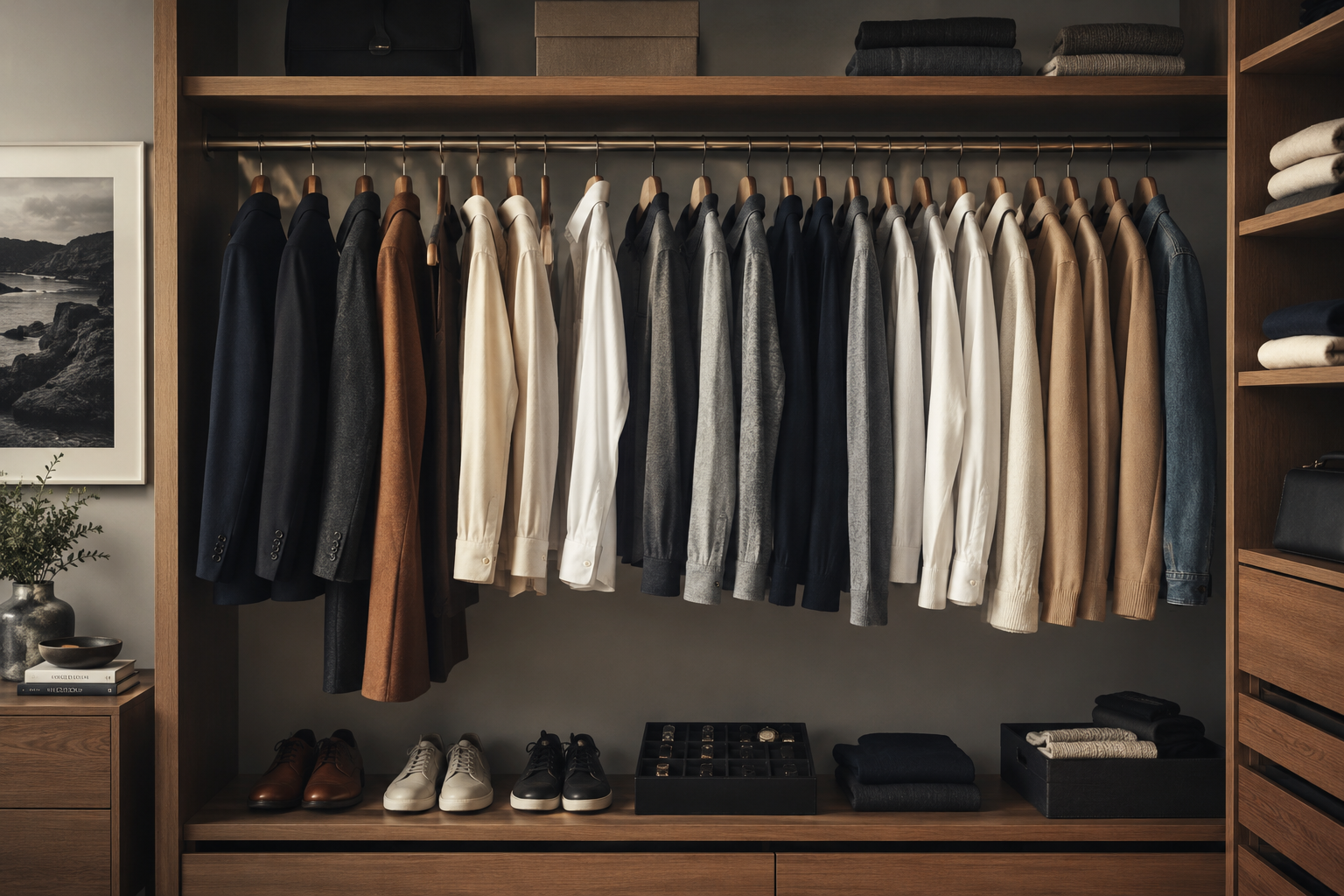
Start With Your Lifestyle, Not a Men's Wardrobe Essentials List
Search for what every man "needs" in his wardrobe and you'll find plenty of lists. Heck, I have a list of my own.
Every man needs a navy suit. Every man needs a white dress shirt. Every man needs a pair of brown oxfords.
Except...does he?
I've styled men professionally for three decades, and I don't believe every man needs the same wardrobe because every man doesn't live the same life.
A 52-year-old CEO who travels, speaks at conferences and entertains clients has different wardrobe requirements from a 42-year-old creative director who works remotely and spends his weekends with his kids.
Their lives are completely different so their wardrobes should look different. So out goes the one one size fits all list and now what?
When I begin working with a private styling client, I'm essentially mapping his life.
Where does he live?
What does his work life look like?
Is he in an office? On Zoom? Meeting clients? Speaking? Traveling?
Where does he go socially?
Does he date?
Entertain?
Have kids whose activities take up half his Saturday?
Attend charity events?
Go to conferences?
Spend weekends at the golf club?
Sit on airplanes constantly?
See what I mean? What I'm really trying to understand is:
What does his wardrobe need to DO?
This is where shopping for clothes becomes a wardrobe strategy.
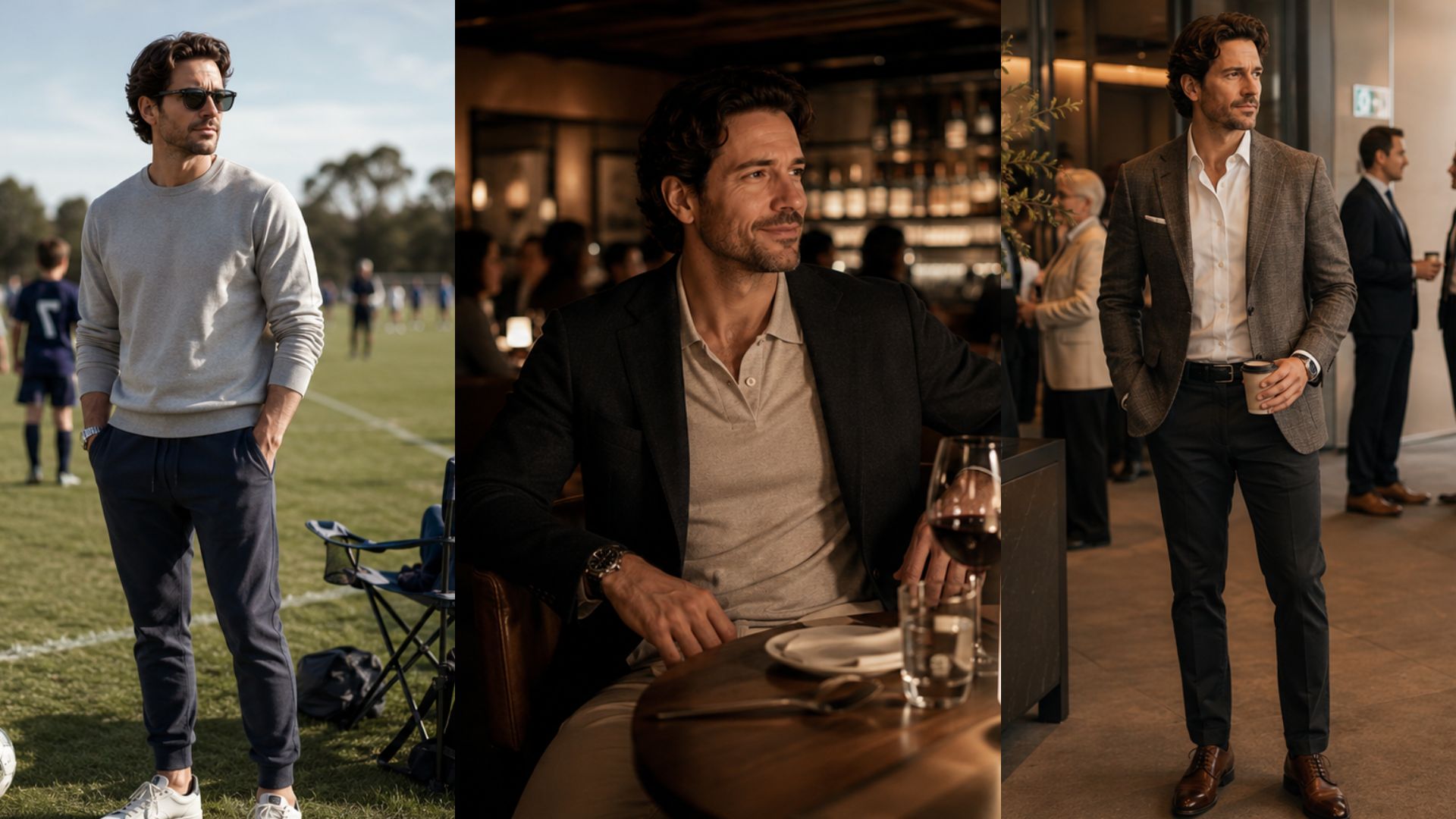
How Do You Know What's Missing From Your Wardrobe?
Before deciding what to buy, look for an imbalance between the clothes you own and the life you live.
Let's say your closet roughly breaks down like this:
- 20% Business
- 60% Casual
- 15% Smart Casual
- 5% Dressier occasions
But your actual life looks more like:
- 20% Business
- 25% Casual
- 40% Smart Casual
- 15% Events, dinners and appearances
There's your problem.You aren't necessarily short on clothing.
You're short on the right clothing.
And buying more random things won’t solve it. That adds inventory without fixing the imbalance
You don't necessarily need more. You need the right blend.
Try This 30-Day Men's Wardrobe Audit
Before you buy anything new, take five minutes and think about the last 30 days.
Not your theoretical lifestyle.
What did you actually do?
Put those activities into a few basic categories.
Work
Office, meetings, Zoom, presentations, client dinners, conferences.
Smart Casual
Dinner with friends, dates, networking events, drinks, nicer weekend plans.
Casual
Errands, kids' activities, coffee, travel days, hanging around.
Events and Appearances
Weddings, cocktail parties, conferences, speaking engagements, charity events and industry functions.
Now look at your closet and compare those percentages with what's hanging in there.
Does your wardrobe roughly match your real life?
This is where things get interesting. You may discover that you don't need more clothes at all. But you do need clothes to fill specific gaps.
The Next Question: What's the Right Level of Formality?
Once I know where a client is going, I want to know:
What's the right level of formality for those situations?
This has gotten considerably harder for men. The old rules were pretty clear.
Suit.
Sport coat.
Leather jacket.
Trousers.
Jeans.
Done.
Now we have casual, elevated casual, smart casual, business casual, cocktail attire and invitations that say completely unhelpful things like festive chic.
Yeah, thanks. That’s super helpful. 🙄
This is what trips up a lot of otherwise successful men. They know how to dress when the rules are obvious. It's the spaces between the rules that create problems.
A client dinner.
A first date at a great restaurant.
A conference cocktail party.
A casual coffee meetup with an important potential client.
You don't want to look overdressed.
You definitely don't want to look underdressed.
You want to look like you understand the room.
That's what dressing well looks like.
And it's one of the things a smartly built wardrobe should make easy.
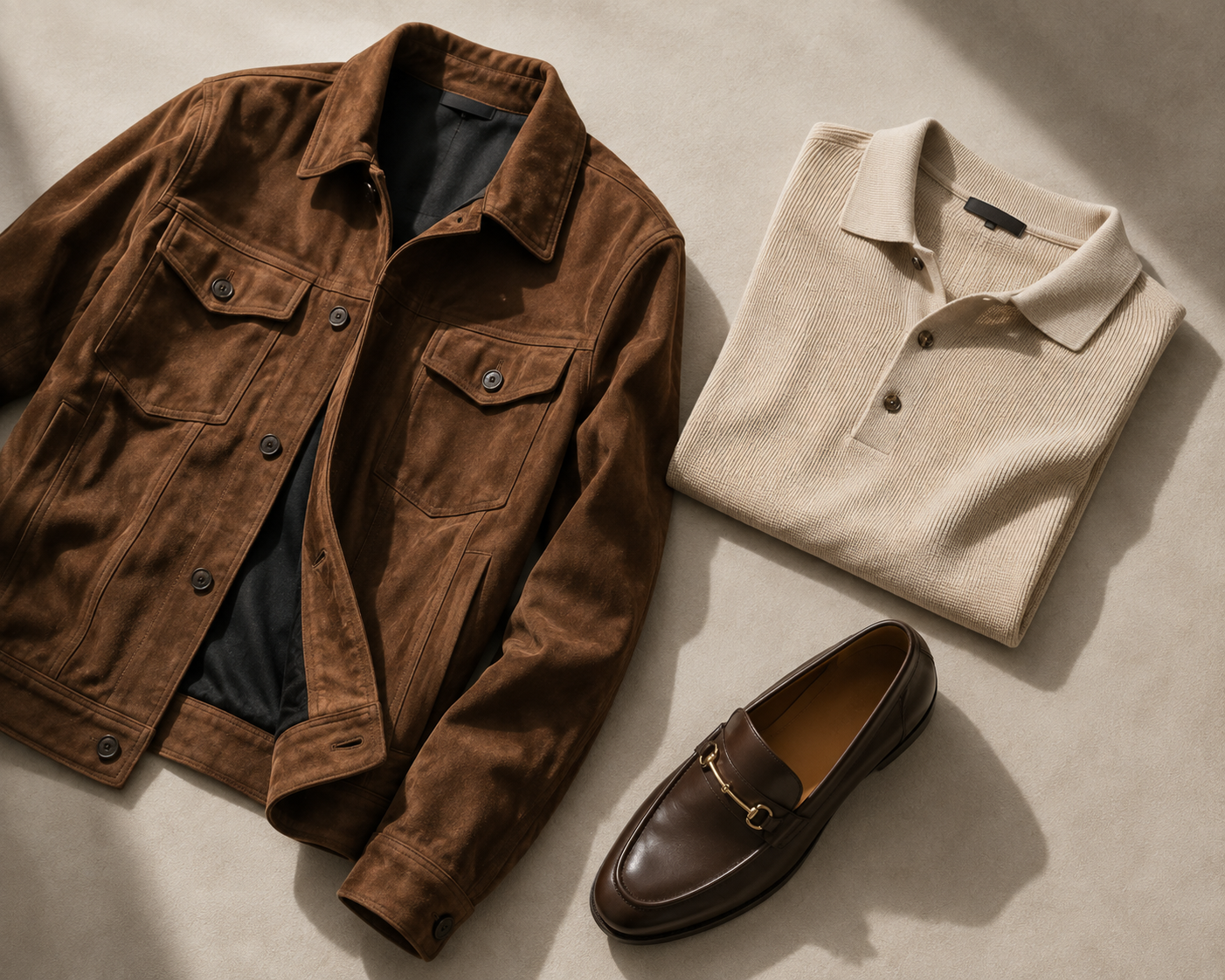
How I Decide What a Client Actually Needs
Only after I understand a man's lifestyle and formality needs do I start deciding what clothes to buy.
Maybe you don't need another suit.
Maybe you need a great suede jacket that gives you a third piece for dinners and smart-casual events.
Maybe you don't need more sneakers, you need a loafer that can move between jeans, trousers and a casual suit.
Maybe you don't need one more button-down shirt. You need knit polos, elevated tees and overshirts because your professional life is now more casual.
That's the difference between buying something because it's nice and buying something because it solves a problem.
One adds another hanger to your closet. The other makes your wardrobe work better.
3 Questions to Ask Before Buying Clothes
The next time you're about to buy something, don't start with:
Do I like it?
Obviously, you should like it, but that's not enough.
Ask yourself:
- Where am I actually going to wear this?
Name the places. Dinner. Work. Travel. Date night. A conference. A weekend event.
If you can't picture yourself wearing it somewhere in your real life, put it down.
- What will I wear it with?
A new piece should work with your existing wardrobe. If buying one shirt suddenly requires new pants, new shoes and a new jacket to make it work, it’s probably not filling the gap you think it is.
- What does this help my wardrobe do that it can't do now?
That’s the question I really want you to start asking.
Does it give you more combinations? Fill a missing level of formality? Give you a better option for an important part of your life? Make getting dressed easier?
If it doesn't add something useful, you may still just be accumulating.
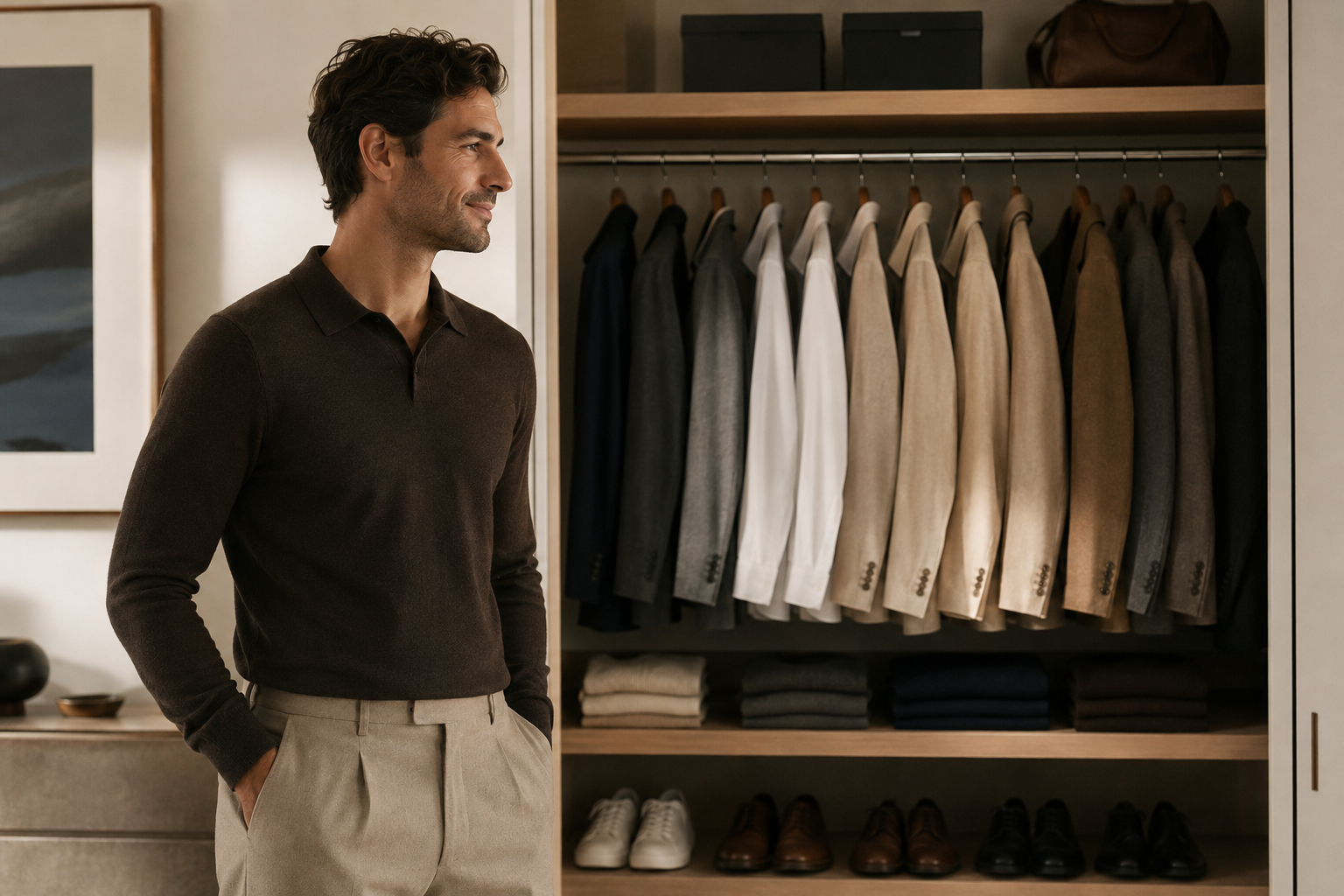
A Better Wardrobe Starts With a Plan
There is no universal list of men's wardrobe essentials that works for everybody.
The right wardrobe is the one designed around your body, your lifestyle, your work, your social life and the situations you regularly walk into.
That's why when I'm building a wardrobe for a client, I'm not starting with what's trending or what's new in stores. I'm starting with him.
His life tells me what the wardrobe needs to do.
Then we build accordingly.
Because the goal isn't to own a closet full of great clothes.
It's to open your closet and have the right answer for the life you're actually living.
Men's Wardrobe FAQs
How do I build a men's wardrobe from scratch?
Start by identifying where you spend your time—work, casual activities, smart-casual situations, travel and events. Determine which categories make up the largest percentage of your life, then prioritize versatile clothing that works within those situations before adding specialty pieces.
What clothes does every man need?
There isn't one universal list. A man's wardrobe should reflect his lifestyle, climate, profession, body, personal preferences and level of formality. A navy suit may be essential for one man and almost useless for another.
Why do I have a closet full of clothes but nothing to wear?
Often the wardrobe is imbalanced. You may own plenty of clothing but too much for certain situations and too little for the situations you encounter most often. Poor versatility between pieces can create the same problem.
What is a smart-casual wardrobe for men?
Smart casual sits between casual and traditional business clothing. It can include pieces such as trousers, dark denim, knit polos, elevated T-shirts, button-down shirts, loafers, clean sneakers, overshirts and unstructured jackets. The exact combination depends on the situation and the man wearing it.
How do I know what clothes I should buy next?
Look for a specific gap rather than simply something you like. Ask where you'll wear the item, what you already own that works with it and what problem it solves in your current wardrobe. The best next purchase should increase the usefulness and range of what you already own.
About the Author
Dina Cerchione is a professional wardrobe stylist with 30 years of experience dressing people for television, media, events and real life. Her work with men focuses on building wardrobes around identity, lifestyle, fit and the way they need to show up in the world.