What’s Your IPPO Factor? How Appearance Affects Identity, Presence, Perception and Opportunity for Men By Dina Cerchione
Most men think getting dressed is about clothes.
After 30 years of dressing people for television, major stages and real life, I think clothes are only the beginning.
Because appearance rarely stays contained to appearance.
Stay with me.
What you wear can affect how you see yourself.
How you see yourself can affect how you show up.
How you show up affects how other people experience you.
And all of that can influence what happens next.
I call this The IPPO Factor: Identity, Presence, Perception and Opportunity.
It's a framework I've developed from decades of watching what happens when a person's appearance stops being something they tolerate, question or work around and starts becoming a tool that supports who they are.
IPPO isn't about becoming more fashionable.
It's about understanding the relationship between your appearance, the way you see yourself, the way you participate, the way other people perceive you and the opportunities you're willing and able to step into.
Because there is a chain reaction happening:
Identity creates internal clarity.
Clarity strengthens certainty.
Certainty changes presence.
Presence influences perception.
Perception + participation affect opportunity.
And your appearance can influence every part of it.
What Is the IPPO Factor?
The IPPO Factor is a framework developed by wardrobe stylist and men's image expert Dina Cerchione to understand how appearance can influence four interconnected areas: Identity, Presence, Perception and Opportunity.
IDENTITY
Who are you—and have you intentionally chosen how you want that man to show up?
PRESENCE
How is that identity actually experienced by other people?
PERCEPTION
What do people believe when they see you and meet you?
OPPORTUNITY
What becomes possible because of how you show up, participate and are perceived?
These aren't four separate boxes.
One influences the next.
And underneath them is something I think men are really looking for when they say they want more confidence:
Certainty.
Certainty about who you are.
Certainty about how you want to show up.
Certainty that you're right for the room.
Because when you stop spending energy questioning yourself, you have more of yourself available for everything else.
That's where appearance gets interesting.
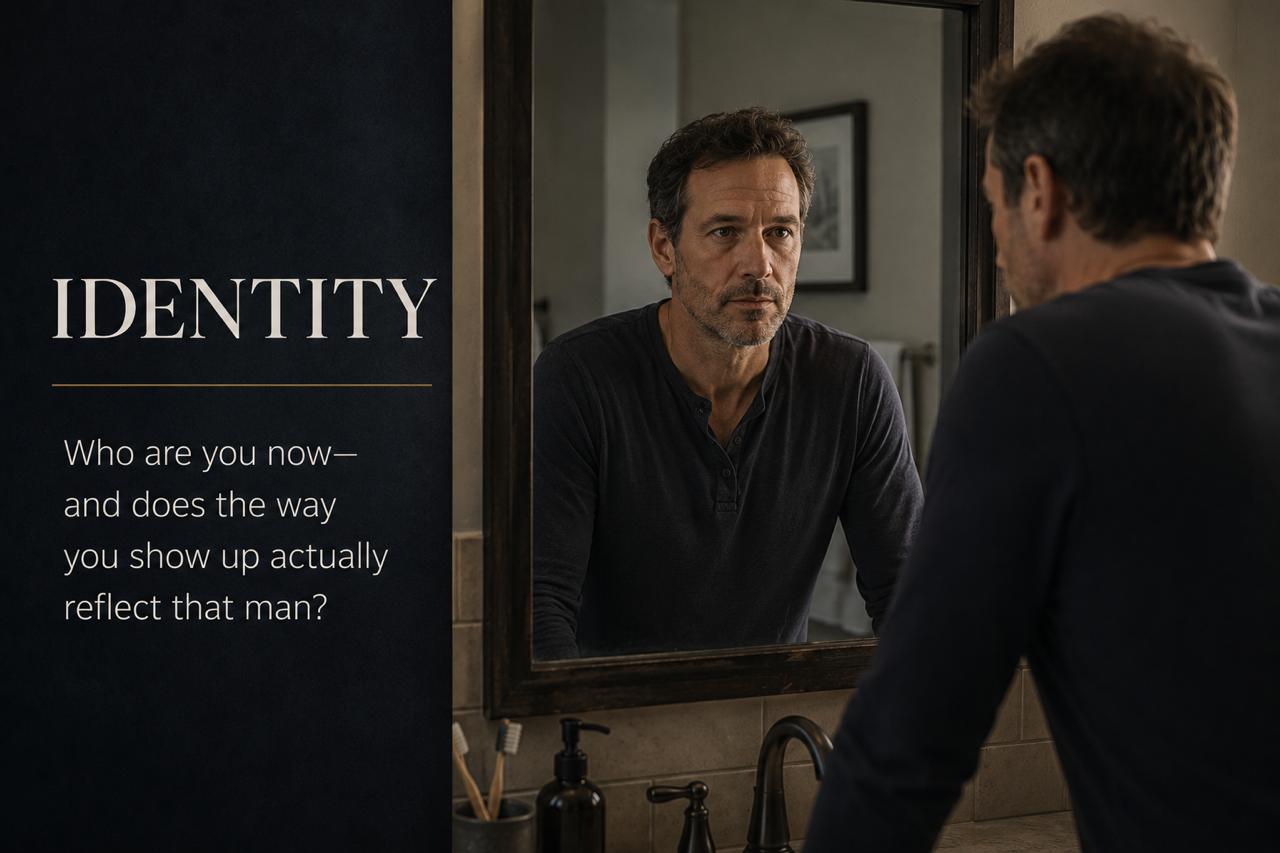
I: IDENTITY
Does the man in the mirror match the man you are now?
This is where I think most conversations about men's style start in the wrong place.
They start with:
What should I buy?
What colors look good on me?
What shoes are in?
How should these pants fit?
What should a man my age wear?
Those questions aren't useless, they're just not the first question.
The first question is:
Who are you now?
Not who where you ten years ago.
Not who you think a man your age, height, weight or profession is supposed to be or look like.
And not some fantasy version of yourself ten years from now.
Who are you now and how do you want that man to show up?
Because I've worked with a lot of men whose lives have changed dramatically while their wardrobes barely changed at all.
They built the company.
Changed careers.
Got promoted.
Got divorced.
Started dating again.
Became fathers.
Lost weight.
Gained weight.
Started speaking on stages.
Became the person in the room everyone else looks to for the answer.
Their identity evolved, but their appearance didn't.
And that's where a disconnect starts.
They're dressing a version of themselves they've outgrown.
Clothing doesn't only affect how other people see you. It can reinforce how you see yourself.
We spend a lot of time talking about clothing as external communication:
What message am I sending?
But there's another conversation happening first.
The one you're having with yourself.
Every morning you get dressed and eventually see yourself in a mirror.
And whether you're conscious of it or not, you're getting information back.
Yep. That's me.
Or:
Something about this isn't me anymore.
Or worse yet:
Ugh
Your appearance can reinforce an identity you've intentionally chosen and
it can also reinforce one you need to let go of.
That's why you'll hear a man say:
“I'm not that kind of guy.”
“I can't pull that off.”
“That's too much for me.”
“I'm too old for that.”
“I'm too short for that.”
“I've just never been good at clothes.”
Listen closely and those aren't really statements about a jacket or a pair of pants.
They're statements about his identity.
And if you keep making choices according to an old belief about who you are, you keep collecting evidence that the belief is true.
I think there's another option:
Be the guy NOW.
You don't have to wait until you lose 20 pounds or until the promotion or until you're more confident.
You don't have to wait until you have the body, life or bank account you think “that guy” is supposed to have.
Start making choices for the man you are now and the man you're actively becoming.
Your wardrobe shouldn't be a relic of your past identity.
It should support your current one.
That's Identity, and it's where IPPO begins.
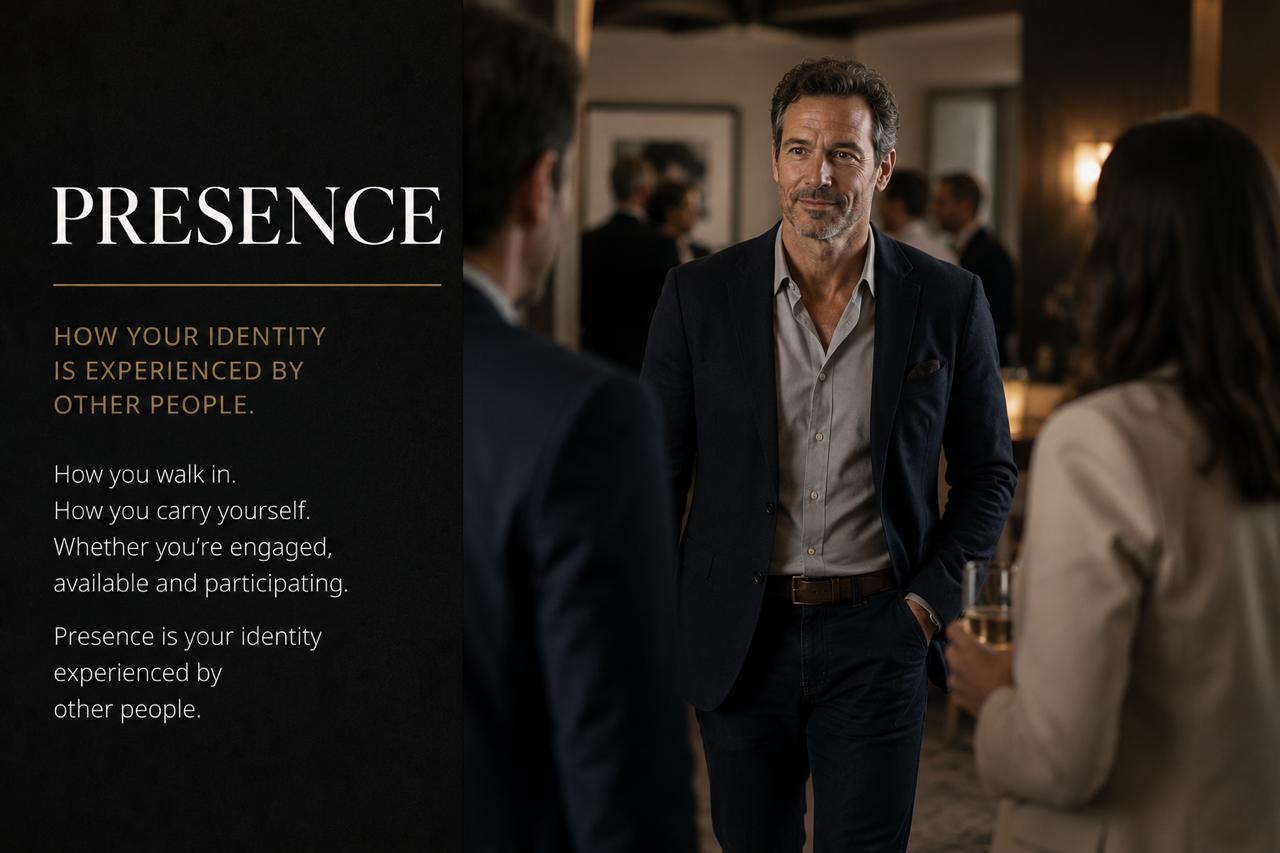
P: PRESENCE
How does your identity enter the room?
Presence gets confused with charisma.
I don't think they're the same thing.
Presence isn't being loud or commanding everyone's attention. And It isn't being the most extroverted person in the room.
Some of the men with the strongest presence I've ever met barely say a word.
My definition is much simpler:
Presence is your identity experienced by other people.
You can know exactly who you are internally.
But the world doesn't experience you internally.
It experiences what you express.
How you walk in.
How you carry yourself.
Whether you make eye contact.
Whether you engage.
Whether you speak.
Whether you participate.
Whether you look comfortable being there.
This is where certainty becomes important.
Certainty changes presence.
People often say dressing well gives you confidence.
I think that's too simplistic.
A jacket can't give you expertise you don't have.
A great pair of shoes can't make you interesting.
And I can't hand you self-worth in a garment bag.
But the right clothes can remove unnecessary uncertainty.
Think about walking into an important event while part of your brain is running this conversation:
Am I underdressed?
Am I overdressed?
Does this fit right?
Why did I wear this?
Everyone here looks better than I do.
Should I have worn the other jacket?
You're physically in the room.
But part of you isn't participating in it.
Part of your mental bandwidth is still monitoring you.
Now imagine walking into the same room not thinking but feeling:
This feels like me.
This makes sense here.
I'm good.
And then you stop thinking about your clothes.
That's appearance certainty.
And I think confidence works like a stack.
You can have:
Skill certainty: I know what I'm doing.
Articulation certainty: I know what I want to say.
Appearance certainty: I know I'm right for this room.
When those things stack together, you're no longer using part of your attention to compensate for the thing you're uncertain about.
You're available. You listen. You make eye contact. You introduce yourself.
You speak when you have something to say.
You walk over to the person you wanted to meet.
You participate.
The clothes didn't create your confidence.
They removed one more reason to question it.
And that changes Presence.
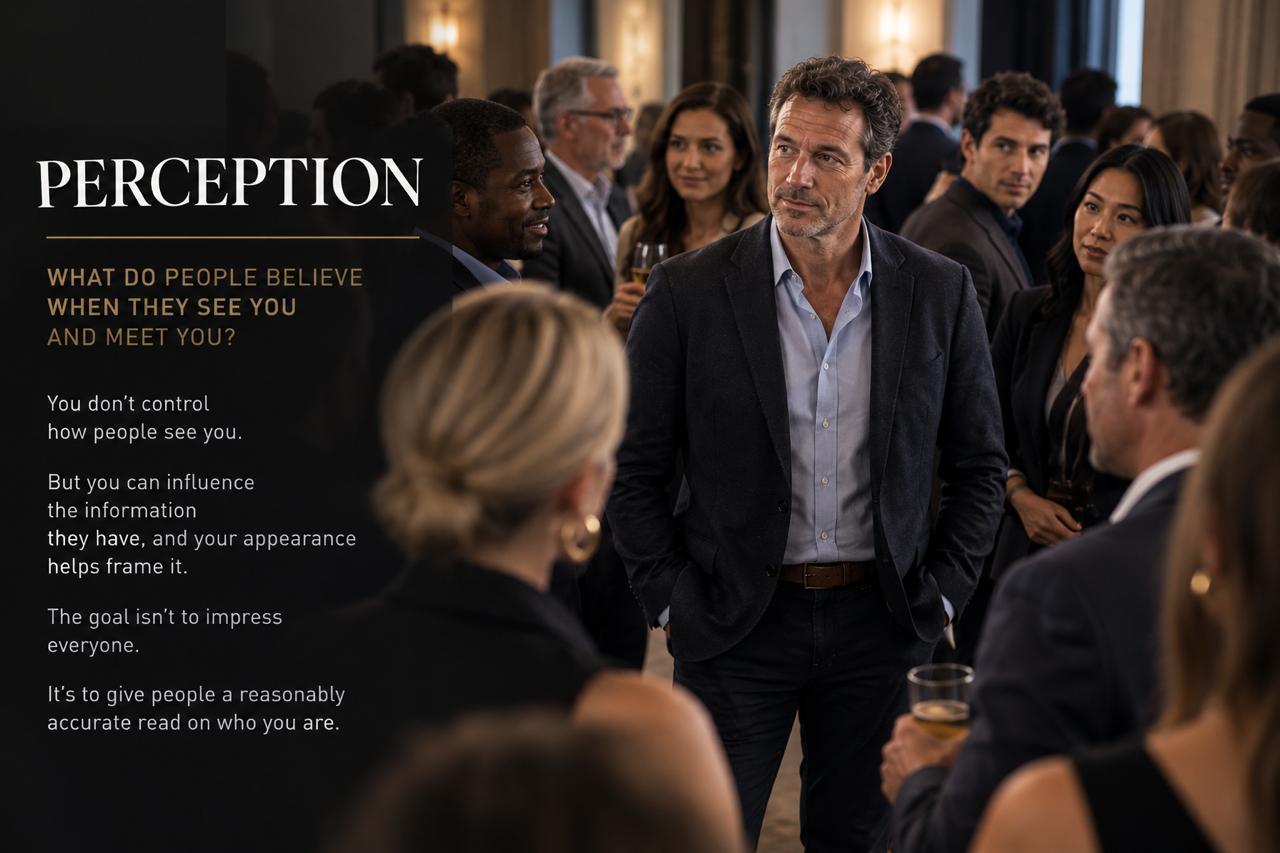
P: PERCEPTION
What do people believe when they see you and meet you?
I've worked in television for more than 30 years.
NBC. CBS. ABC. FOX. Netflix. Major live broadcasts, game shows, reality television, commercials and some of the biggest stages in the business.
And one of the first conversations surrounding wardrobe is almost always some version of:
What's the story we need to tell?
Because the audience needs to understand something about the person they're looking at.
Maybe we need authority.
Maybe we need warmth.
Maybe we need creativity.
Maybe we need credibility.
Maybe this person needs to feel aspirational.
Maybe they need to feel relatable.
Maybe we need someone to look like they belong in that world before they've said a single word.
Wardrobe helps tell that story.
Television didn't invent this. Television just makes it obvious.
Human beings do it to each other every day.
Every interaction starts with a story.
When you meet another person, you start collecting information.
Not necessarily consciously.
And the story you form isn't necessarily accurate.
But your brain is trying to understand:
Who is this person?
So you take in what's available.
How he's speaking. How he's standing. How he's behaving.
What he's wearing?
How the clothing fits.
Whether it makes sense for the environment.
Whether all of those signals seem to belong to the same person.
That's why my definition of perception is very simple:
Perception is what people believe when they see you and meet you.
Your clothes don't tell the entire story.
But they help frame it.
And you don't completely control what other people think of you.
Nor should you try.
The goal isn't manipulation.
The goal is to make it easier for people to see what's already true.
If you're an expert in your field but your appearance initially causes people to underestimate you, your expertise may eventually correct that assumption.
But why create the extra work?
If you're warm and approachable but everything about your appearance reads severe or inaccessible, people may eventually discover otherwise.
Again—why make them work so hard to get there?
If you're innovative but visually presenting yourself exactly like everyone else in your industry, people may eventually discover what makes you different.
But you've missed an opportunity to give them that information sooner.
I don't think your appearance needs to impress everyone.
I think it needs to give people reasonably accurate information about who they're dealing with.
That's Perception.
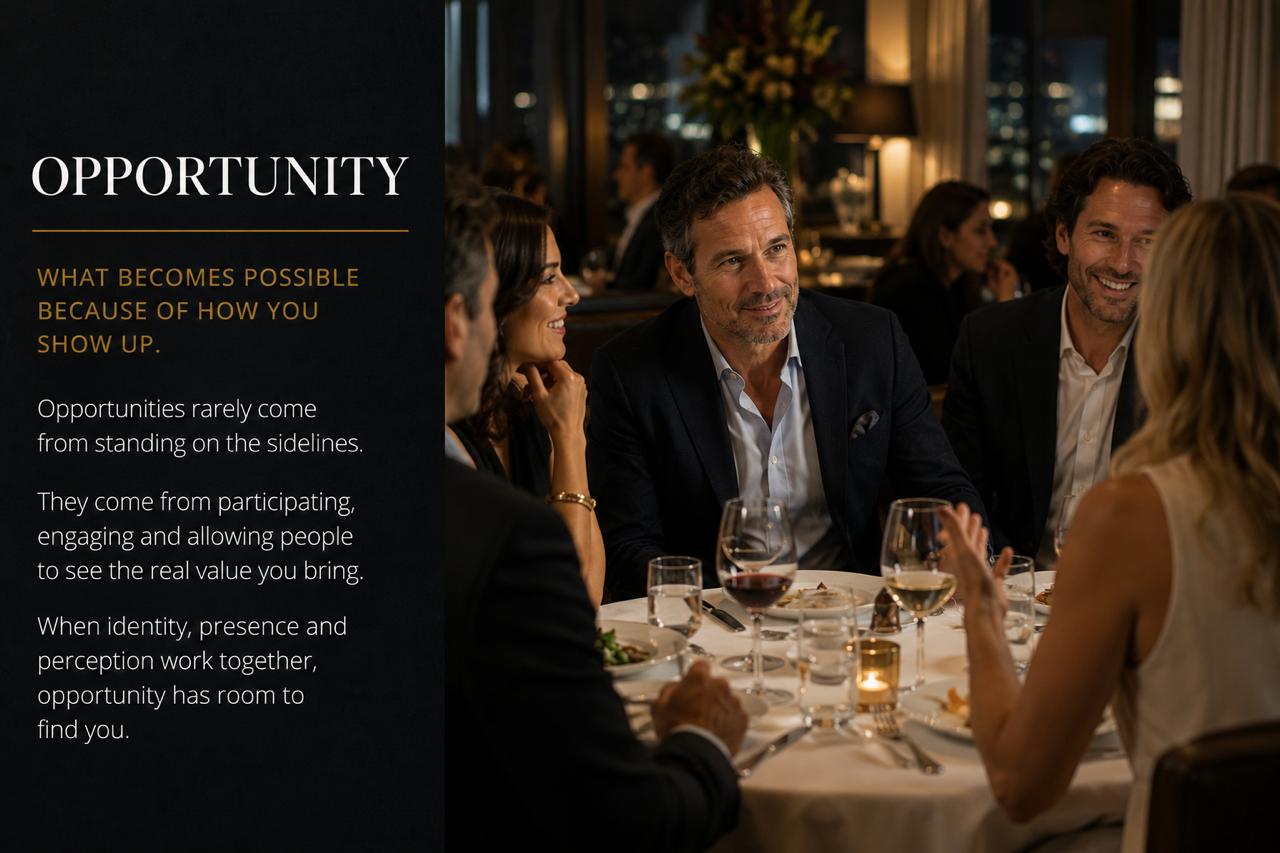
O: OPPORTUNITY
What happens because of all of the above?
This is where IPPO becomes much bigger than clothing.
Identity affects how you see yourself.
Clarity strengthens certainty.
Certainty affects how you show up.
Your presence gives other people something to experience.
They form perceptions from that experience.
And all of it can affect what happens next.
Interactions.
Introductions.
Visibility.
Trust.
Relationships.
Invitations.
And ultimately:
Opportunity.
I want to be careful here because I have zero interest in selling you the old idea of “dress for success.”
Put on an expensive suit and doors magically open?
No.
Wear the right watch and suddenly everyone respects you?
No.
Buy better clothes and become successful?
Definitely not.
That's not how this works.
Two men walk into the same room.
They're roughly the same age.
Equally successful.
Equally intelligent.
Equally qualified.
The first man walks in feeling slightly unsure of himself.
He's not completely comfortable with what he's wearing and he feels a little out of place.
So he hangs back. He talks to the people he already knows.
He sees someone across the room he'd like to meet but decides not to interrupt.
He doesn't contribute much to the conversation.
He leaves early.
The second man walks into the exact same room feeling completely calibrated to it.
He's not thinking about his clothes.
He's not wondering whether he belongs.
He's available to the room.
He notices people.
He introduces himself.
He joins the conversation.
He speaks when he has something to say.
He stays long enough to meet someone interesting.
Now ask yourself:
Which man had access to more possibilities that night?
The clothes didn't create the opportunity.
They didn't create the man's intelligence, talent, personality or expertise.
But they may have removed one of the barriers standing between him and his willingness to participate and how he is seen by others.
And sometimes participation is the difference between an opportunity existing and you actually having access to it.
That's Opportunity.
So, What's Your IPPO Factor?
Most men have never thought about their appearance this way.
They've thought:
Do I look good?
Does this match?
Is this appropriate?
Am I too old to wear this?
Do these pants fit?
Those are wardrobe questions.
They're useful.
But IPPO asks you to go one level higher.
So next time you find yourself getting ready for an event, a dinner, someplace where you’re not quite sure of what to wear ask yourself…
IDENTITY
Does the way I show up match the man I am now or am I still dressing an older version of myself?
PRESENCE
When I enter a room, am I fully available to it or is part of me hanging back?
PERCEPTION
Is what people initially see reasonably consistent with what I know to be true about me?
OPPORTUNITY
Is the way I'm showing up helping me participate in the life I'm building—or quietly getting in the way?
Your answers won't necessarily be the same across all four.
That's actually the point.
You can know who you are but struggle to express it.
You can have tremendous professional certainty and very little appearance certainty.
You can look fantastic and still disappear in the room.
You can have presence in a suit at work and feel completely lost at a dinner, date, conference or social event.
You can be highly successful and still be dressing a version of himself that stopped being accurate ten years ago.
IPPO helps you find the disconnect.
Figure it out and you’ll enter every room with confidence, presence and opportunities waiting to be had.
About the Author
Dina Cerchione is a personal stylist for men and the founder of The Men's E.D.I.T. She helps ambitious men use the power of presence to reach their goals, through intentional wardrobes built around their real lives, not trends.s