When Did You Decide This Was Your Style?
You may have spent the last decade building a different life. But are you still dressing for the one you had?
There's a question I sometimes ask the men I work with that catches them off guard.
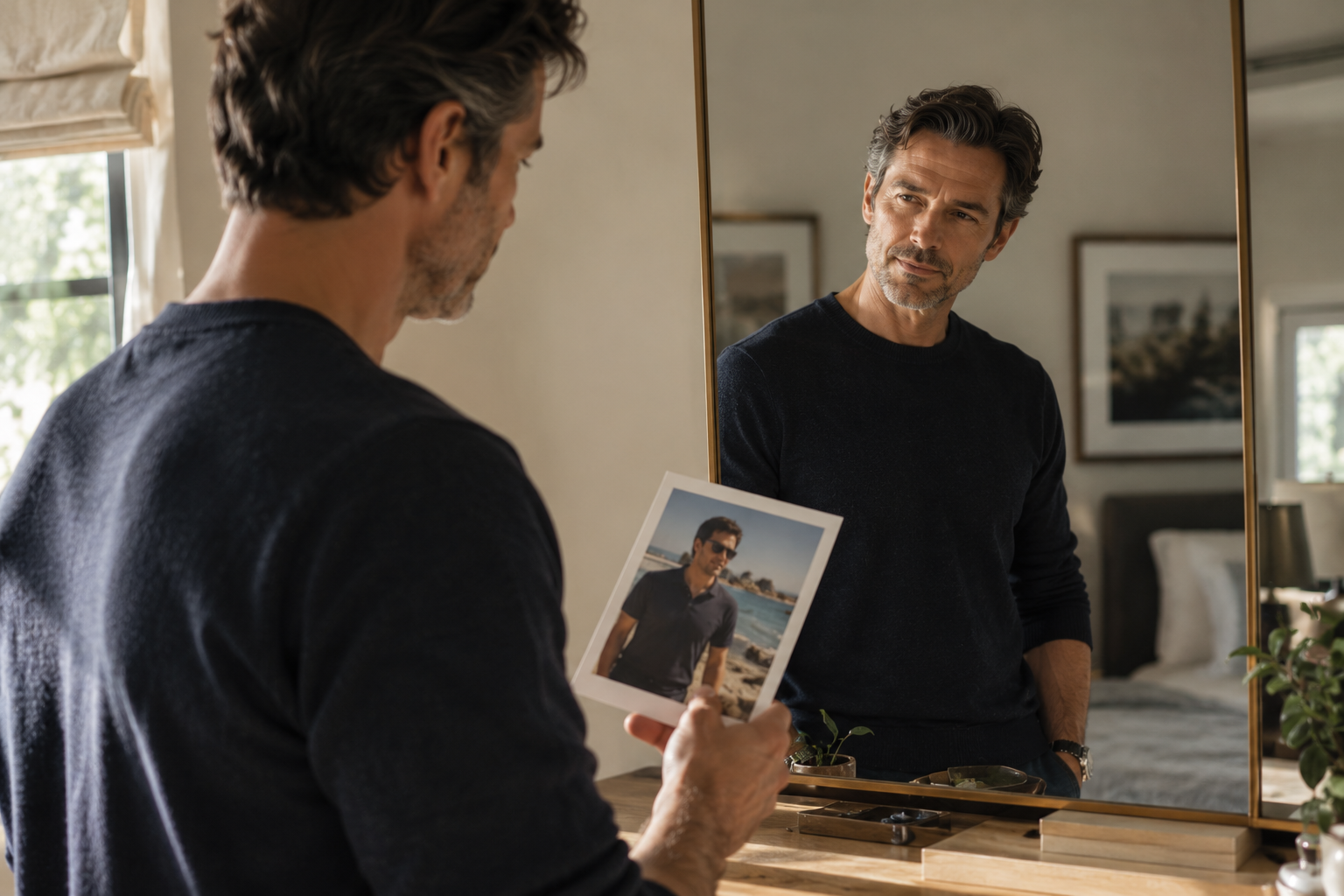
When did you decide this was your style?
Not when you bought the clothes.
Not why you like a particular brand.
When did you actually decide that the way you dress today is how you want to look?
Most men can't point to a specific moment.
And that's because, for most of us, personal style isn't something we consciously create. It's something we accumulate.
You find things you like. You figure out what fits. Someone compliments a shirt, so you buy another one. You discover a particular brand that works for your body, and suddenly half your closet comes from the same place.
A few years go by, and you've developed a look.
Your look.
Comfortable. Familiar. Reliable.
There's a lot to be said for knowing what works for you.
But here's the question worth asking:
Is what worked for you 10 years ago still what you'd choose today?
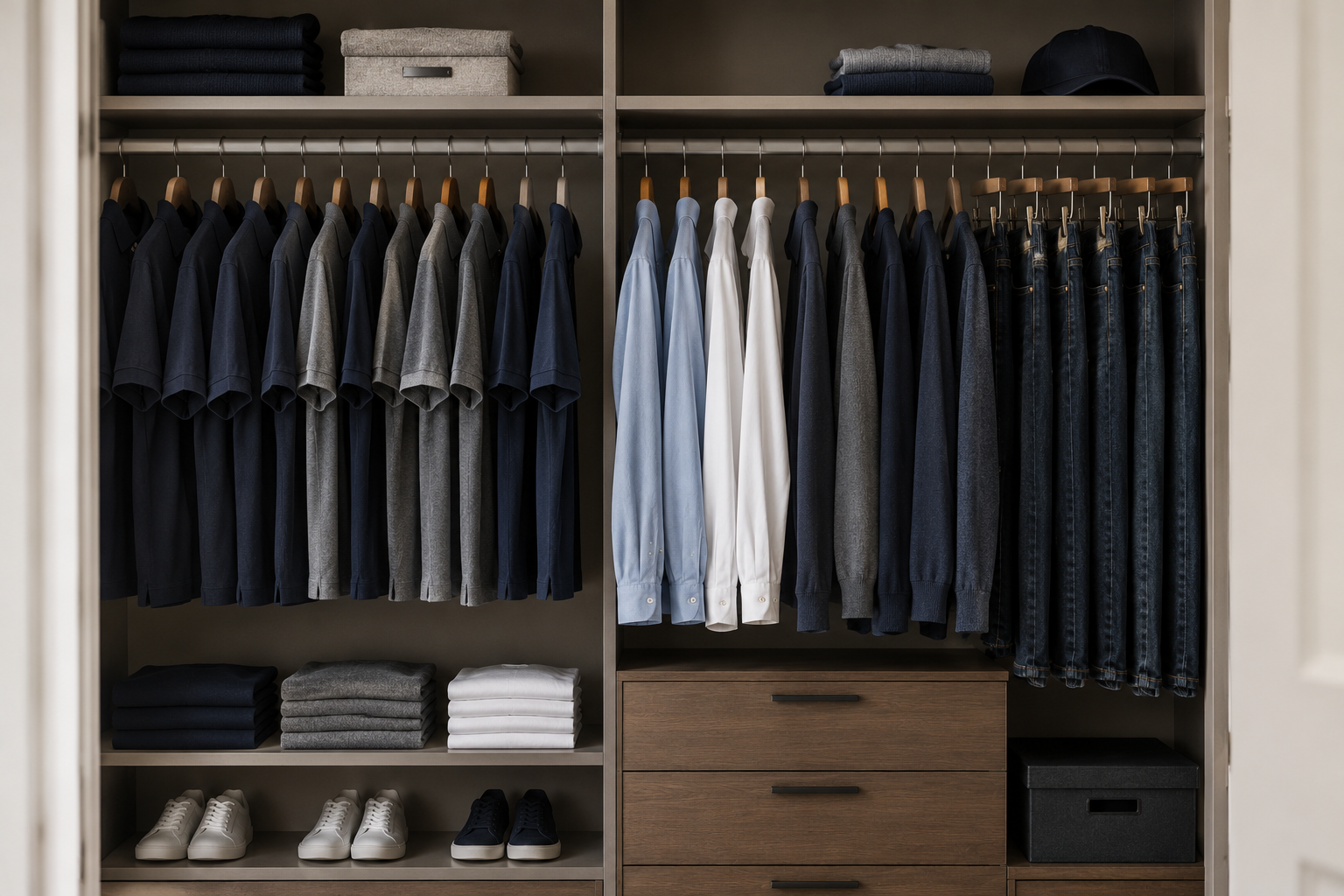
You’ve changed. Your clothes might not have.
Think about how much has happened in your life over the last decade.
Maybe you've built a successful business.
Maybe you've left corporate life and now have the freedom to dress however you want.
Maybe you've gone through a divorce, started dating again, changed careers, become a father, or reached a point where you're finally doing things on your own terms.
Or maybe nothing particularly dramatic has happened.
You've just grown.
You're more comfortable in your skin. You know yourself better. You have different priorities, different interests, and a different idea of how you want to spend your time.
You're not the same man you were 10 years ago.
So why would we automatically assume that the clothes you chose for that version of yourself are still the best choices for the man you are today?
Now, I'm not suggesting you throw away your favorite jeans or suddenly start dressing like somebody else.
In fact, I'd argue the opposite.
The most interesting personal style comes from knowing who you are, not from chasing whatever happens to be fashionable.
But there's an important distinction between knowing your style and simply being accustomed to it.
And that's where things get interesting.
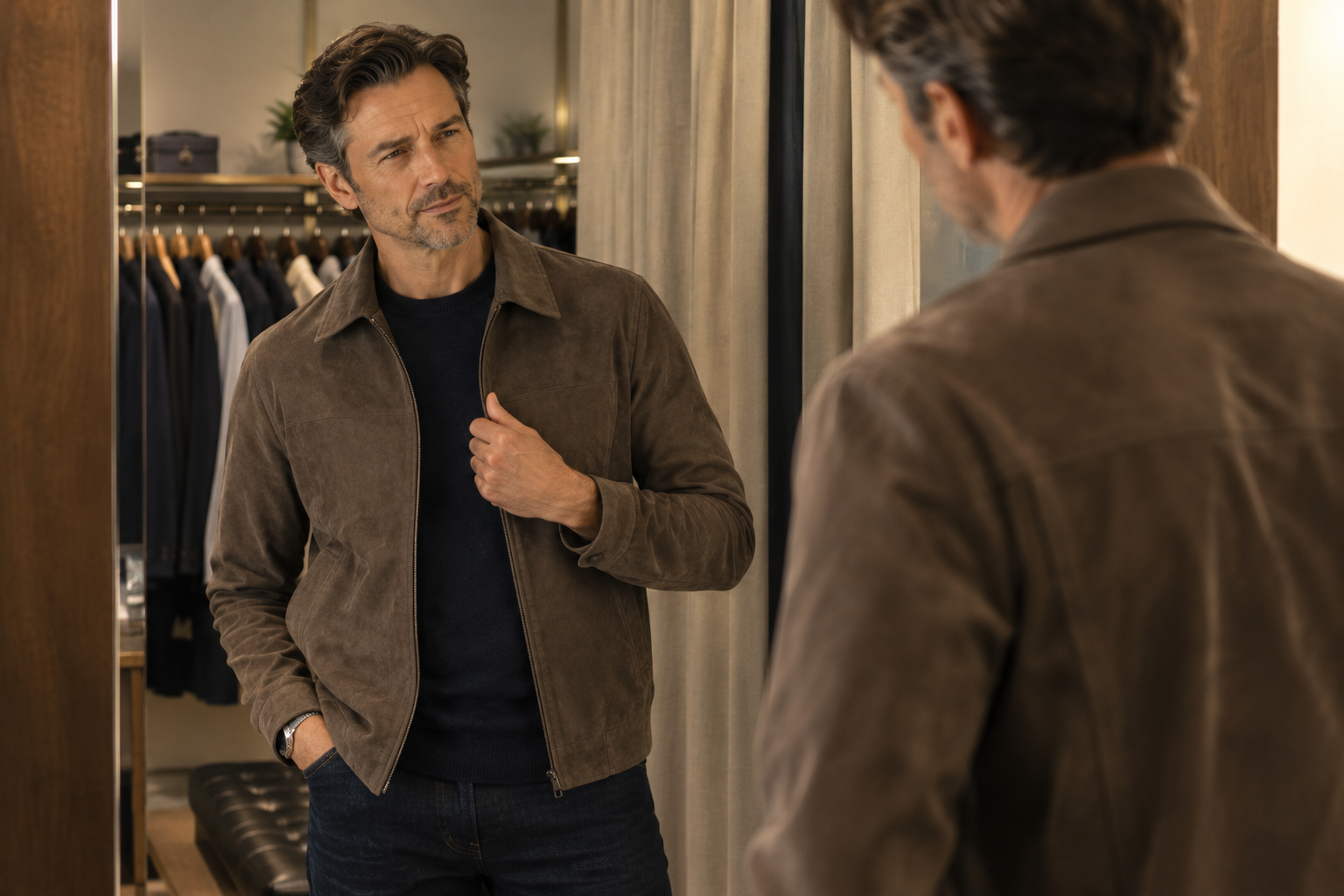
Familiar doesn't always mean right.
I've spent three decades styling people in television, entertainment, and private life, including men at very different stages of their careers.
One thing I've learned is that the hardest part of updating someone's wardrobe often has very little to do with finding better clothes.
It's getting them to reconsider what they believe looks right on them.
I'll suggest a different silhouette, a new combination of colors, or a piece they wouldn't ordinarily pick up.
And I can almost predict what comes next.
"That's not really me."
Sometimes they're right.
But sometimes what they actually mean is:
"That's not what I'm used to seeing myself wear."
Those are two very different things.
Maybe you've always worn slim-fit pants because, for years, that was the silhouette you felt best in.
Now you're looking at a straighter, more relaxed cut, and it feels unfamiliar.
Or you've always bought blue and gray because they're easy, flattering, and you've built a wardrobe around them.
Then someone introduces you to a rich chocolate brown, an olive green, or an interesting textured knit.
Your first reaction might be that it's not your style.
But is that because it doesn't suit you?
Or because you've never given it a chance?
There's a difference between having a preference and having a rule you've never questioned.
The clothes aren't necessarily the problem.
This is where I think a lot of men's style advice misses the point.
We're constantly being told what to buy.
The five shirts every man needs.
The jeans you should be wearing.
The shoes that are out of style.
Some of that advice is useful.
But you can own the right brands, invest in beautiful clothes, and still feel like something isn't quite clicking when you look in the mirror.
Because buying better clothes doesn't automatically change the way you see yourself.
I can put a terrific jacket on a man. I can show him how to wear it, what to pair it with, and why it works for his body.
But if he's convinced he's not the kind of guy who wears that jacket, chances are it'll stay in his closet.
Not because it looks bad.
Because he hasn't given himself permission to look different.
And I find that fascinating.
We give ourselves permission to grow in almost every other part of our lives.
We change careers. We take on bigger challenges. We develop new interests. We rethink relationships, routines, and priorities.
But when it comes to how we dress, we can become surprisingly attached to the rules we made years ago.
Rules we might not even remember making.
You don't need to reinvent yourself.
I want to be clear about something.
Updating your personal style doesn't mean you have to become more fashionable, more formal, or more noticeable than you want to be.
It doesn't mean giving up the pieces you've loved for years.
And it certainly doesn't mean dressing like a 30-year-old if you're 55.
It means being intentional about what you're choosing now.
For one man, that might mean finally letting go of the corporate wardrobe he no longer needs.
He's built a successful business. He doesn't wear suits anymore. But every time he has an important dinner or speaking engagement, he feels like he has to put one on to look credible.
What if he explored a beautifully cut jacket with a knit shirt and great trousers instead?
For another guy, it might mean moving beyond the jeans-and-polo combination that's been his default for 15 years.
Nothing wrong with jeans and a polo.
But what happens when he tries a knit camp-collar shirt, a trouser, or a different proportion?
He's still comfortable. Still recognizable.
Just a little more considered.
And for someone else, it might be as simple as wearing the clothes he already owns with a little more confidence.
Tucking the shirt instead of leaving it untucked.
Rolling the sleeve differently.
Adding a belt that actually contributes something to the outfit.
Choosing the suede jacket instead of the fleece.
Small decisions can make a familiar outfit feel completely different.
You don't have to abandon your style to evolve it.
You just have to stop treating it like it's set in stone.
The 10-year test: A simple way to update your personal style
Here's an exercise I want you to try.
It takes about five minutes, requires absolutely no shopping, and might tell you more about your current wardrobe than another afternoon walking around a store.
1. Put on one of your go-to outfits.
Choose something you wear regularly.
Not the outfit you save for a special dinner.
Not the one you wear when you're trying to impress someone.
The outfit you put on when you get up and get dressed for your day.
Look at yourself in the mirror.
2. Ask yourself four questions.
Would I have worn this exact outfit 10 years ago?
Maybe the answer is yes.
That's not automatically a problem. Great style can last decades.
But it's worth noticing whether the outfit is still an active choice or simply a habit.
Does it represent how I want to show up today?
Think about where you're going, who you're spending time with, and how you want to feel.
Does this outfit fit the life you're actually living?
The level you are living at?
Or does it reflect an earlier version of your routine?
Does it give me any energy when I look in the mirror?
I'm not asking whether you're overwhelmed with excitement every time you put on a shirt.
It's a shirt.
But there's a difference between looking in the mirror and thinking, "That’s fine," and looking in the mirror and thinking, "I like the way I look in this."
One is about getting dressed.
The other is about enjoying how you're showing up.
What's one thing I could change to make this feel more current?
This is where I want you to pay attention.
Don't change the entire outfit, just one thing.
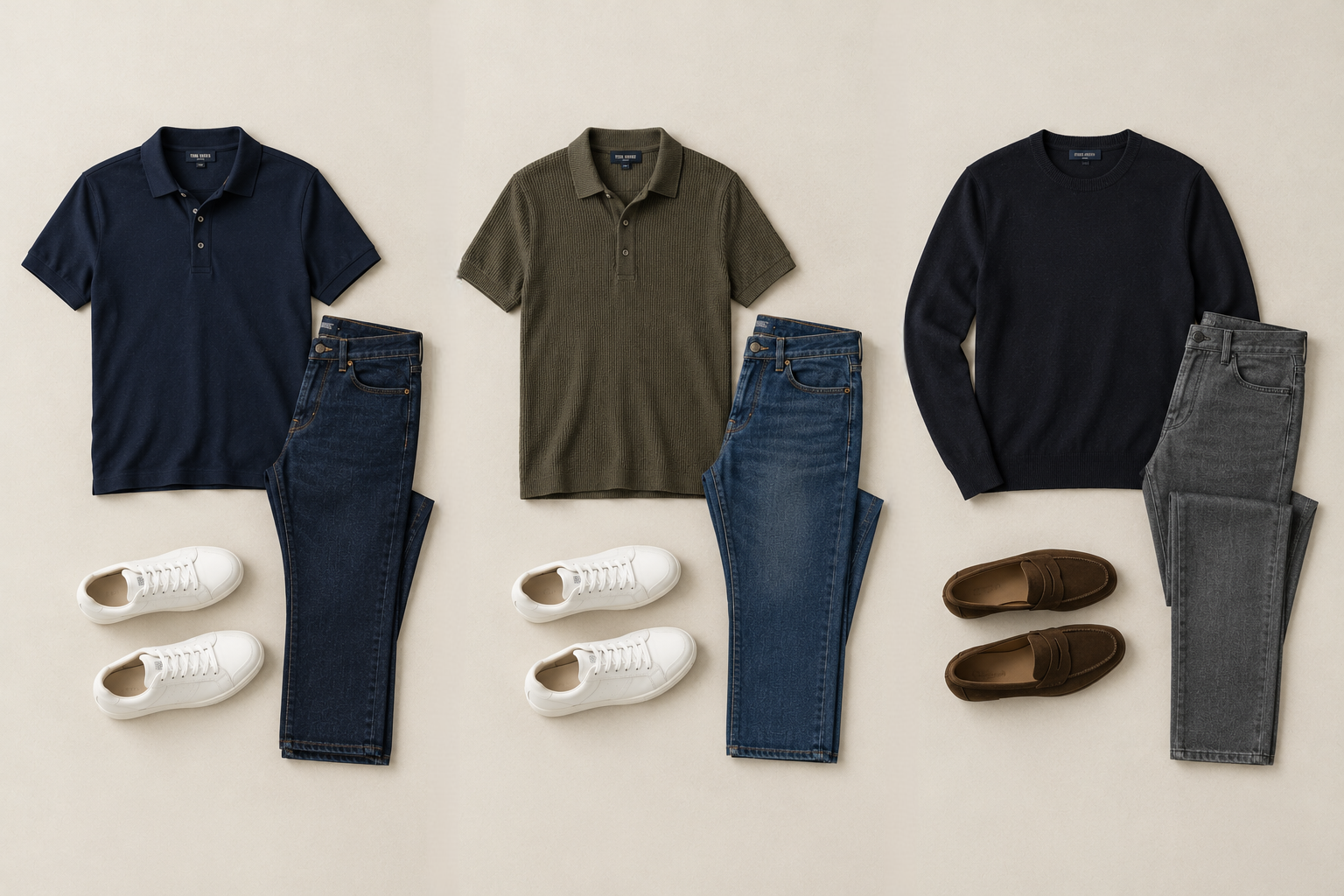
3. Make a simple change.
Let's say your standard outfit is a navy polo, slim jeans, and sneakers.
It's perfectly fine.
But what happens if you switch the polo for a textured knit shirt?
Or keep the polo and try a straighter pair of jeans?
Maybe you replace your everyday athletic sneakers with a suede loafer or a cleaner, more intentional casual shoe.
Suddenly, the outfit has a slightly different energy.
Not because you reinvented yourself.
Because you made a new choice.
Here's another example.
You always wear a button-down shirt, chinos, and a navy blazer for business dinners.
It's a solid combination.
But what if you try a dark knit polo under that same blazer?
Or a textured jacket in place of the navy one?
What if you keep everything else and simply change the shoes?
The point isn't that any one of these combinations is automatically better.
The point is that you get to decide.
And you might discover something you like even more than what you've been wearing.
4. Pay attention to how it feels.
After you've made that one change, wear the outfit somewhere.
Don't just look at yourself for 30 seconds and put your old clothes back on.
Give the new combination a chance.
Notice how you feel walking into a restaurant, meeting a friend, going to work, or attending an event.
Does it feel natural after a little while?
Do you feel more put together?
Do you catch yourself standing a little taller?
Or does it genuinely feel wrong for you?
That's useful information, too.
Style isn't about forcing yourself into things you don't like.
It's about knowing the difference between something that isn't right for you and something you simply haven't tried before.
Don't confuse consistency with standing still.
There's real value in developing a recognizable personal style.
Some of the best-dressed men I know have a consistent point of view.
You can almost predict what they'll wear because they've figured out what they love.
But consistency doesn't mean wearing the same version of yourself forever.
A man can love denim for 30 years and change the cut as his preferences evolve.
He can wear nothing but neutrals and still explore new textures, shapes, and proportions.
He can be a jeans-and-T-shirt guy and look considerably more interesting by paying attention to fit, fabric, and the third piece he adds.
There's room to evolve without becoming someone else.
In fact, that's what makes personal style interesting.
It grows with you.
Or at least, it should.

What does the next version of you look like?
Here's what I'd like you to take away from this.
You don't need to find a problem with your wardrobe to be interested in improving it.
You don't have to be unhappy with how you dress.
You can have great clothes. You can know what works for you. You can feel perfectly comfortable with your appearance.
And still be curious about what else is possible.
That's a very different place to approach men's style from.
Not fixing something that's wrong.
Exploring something that could be better.
So tomorrow morning, before you reach for the same combination you've worn a hundred times, take a second.
Look at what you've chosen.
And ask yourself:
If I were deciding how I wanted to dress for the first time today, would I make the same choices?
Maybe you would.
Great.
But if you wouldn't, why are you still making them?
You have permission to change your mind.
And you might be surprised by how good that feels.
Ready to see what else is possible?
If your wardrobe works but you're beginning to wonder whether it could work harder, that's exactly the kind of thinking I explore with my personal clients.
No unnecessary reinvention. No shopping just to shop.
Just a clear direction, a wardrobe that makes sense, and the confidence to make different choices.
Find out more here: DMCStyles.com
About Dina Cerchione
Dina Cerchione is a men's personal stylist and wardrobe expert with nearly 30 years of experience styling for television, entertainment and private clients. Her work focuses on the intersection of identity, presence and perception and helping men build wardrobes that match who they are, where they're going and how they want to show up.