The Three Keys to Great Men's Style: Color, Fit, and Consistency
There are three things most men say when the subject of style comes up.
"I don't want to look like I'm trying too hard."
"I don't want to look like I'm chasing trends."
"I don't want to look irrelevant."
What they're all really saying is the same thing: I want to look like a man who knows exactly who he is.
Because the alternative — dressing inconsistently, chasing whatever caught your eye on Instagram, cycling through different aesthetics without a clear point of view — doesn't read as stylish. It reads as unsure. And whether you consciously register it or not, you feel that uncertainty too. It shows up in how you walk into a room, how you carry yourself, how you present in moments that actually matter.
So what's the actual difference between a man whose clothes just exist in his closet and a man whose clothes have become his style?
It's the moment he puts something on and thinks: that's me.
That moment — that feeling of alignment — is what changes how you move through the world. And it doesn't happen by accident. It comes down to three fundamentals that most men have never been taught to think about deliberately: Color, Fit, and Consistency.
Key #1: Color — The Silent Heavy Lifter in Every Outfit
Color is doing more work in your outfit than almost anything else — and most men are completely ignoring it.
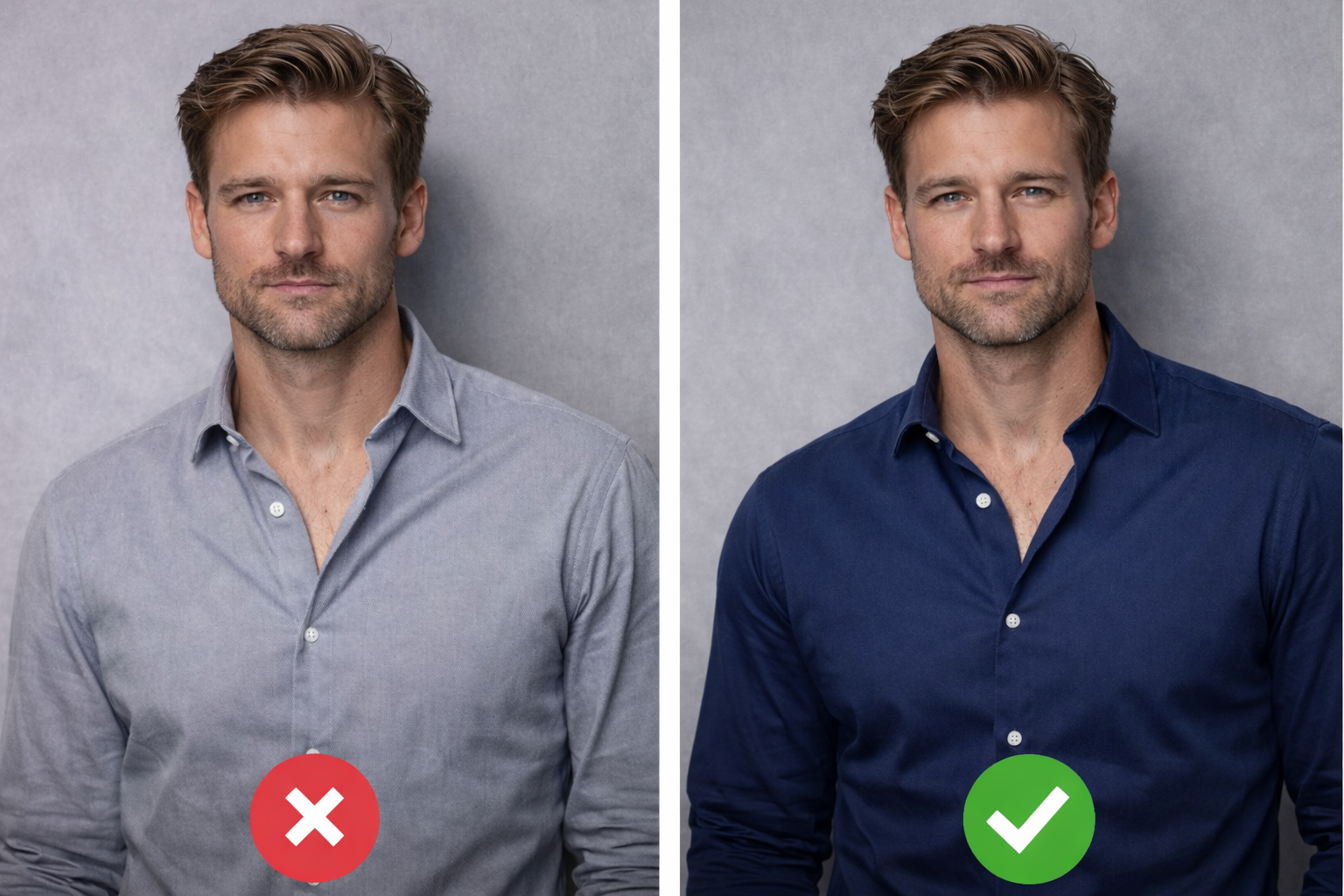
The right color isn't about what's trending this season. It has nothing to do with what a brand is pushing or what's all over social media right now. The right color for you is specifically about what works with your skin tone, your undertones, and your natural coloring. And when you get that right, something almost effortless happens: a simple outfit suddenly looks sharp, put-together, and alive.
The wrong color does the opposite. It can make you look washed out, tired, or even older than you are — not because the outfit is bad, but because the color is fighting against you rather than working with you.
Think about the difference between a navy that truly hits for your complexion versus a shade that falls flat. On paper, it's a subtle distinction. In real life, it's significant. The right navy makes you look awake, confident, and pulled together with zero extra effort. The wrong shade makes a well-fitting outfit look somehow off — and you can't quite figure out why.
That "why does this not work" feeling is often color. And it's one of the first things addressed when building a truly dialed-in wardrobe.
What Color Strategy Actually Looks Like
Building color into your wardrobe with intention means identifying a core palette — a small set of colors that consistently work with your skin tone and that can anchor your wardrobe across seasons and occasions. These become your neutrals, your accent colors, and your statement shades. Once you know your palette, shopping becomes dramatically easier. Getting dressed becomes faster. And everything in your closet starts to work together rather than clash or compete.
This is not about wearing the same colors every day. It's about having a framework that makes every color decision easier and more consistently right.
Key #2: Fit — The Most Underestimated Factor in Men's Style
If color is the silent lifter, fit is the foundation. And it's where the overwhelming majority of men lose the game entirely — not because they can't afford better clothes, but because they've never been taught what fit actually means for their specific body.
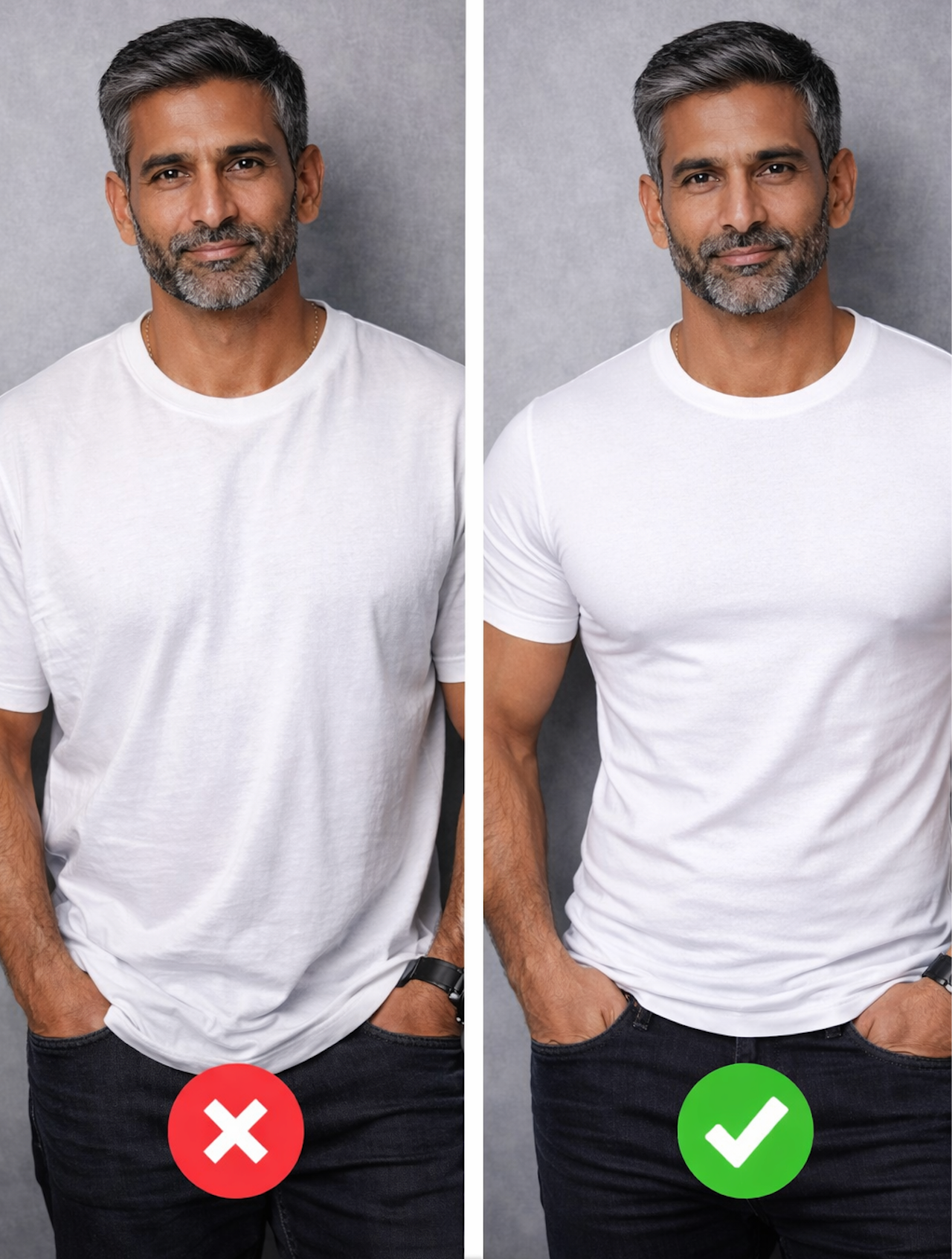
Fit is the single most powerful element in men's style. A moderately priced garment that fits perfectly will always look better than an expensive one that doesn't. Always. No exceptions.
But here's what men usually get wrong: they think fit is binary. Either something fits or it doesn't. In reality, fit exists on a spectrum — and the difference between clothing that makes you look intentional and clothing that makes you look like you're wearing someone else's clothes often comes down to very small adjustments.
The Fit Spectrum
Think about it this way:
- Too tight: reads as trying too hard. It looks like you're aware of your body in a way that draws uncomfortable attention, or like you're wearing something from a few years ago that no longer quite works.
- Too loose: reads as indifference. It softens your silhouette, adds visual weight, and communicates that you haven't thought about what you're wearing. Even expensive clothes in the wrong fit read as cheap.
- The right fit: intentional, confident, clean. It follows your body without clinging to it. It creates a silhouette that looks like a decision was made. That middle ground is where confidence lives in clothing.
The right fit doesn't always mean bespoke or tailored. It means knowing what cuts work for your frame, which brands run closer to your proportions, and when a simple alteration can take something from almost-right to exactly-right. A $40 shirt that fits you perfectly outperforms a $300 shirt that doesn't — every single time.
Why Fit Communicates More Than You Think
Fit is also a signal. When something fits well, it reads as intentional — even when the outfit itself is simple. A clean, well-fitted white shirt and trousers can be more powerful than a complicated outfit that fits poorly. Fit communicates that you paid attention. That you know what works for your body. That you've thought about how you present yourself.
That signal lands before you say a word.
Key #3: Consistency — The One Nobody Talks About
Color and fit get discussed in men's style content fairly often. Consistency almost never does. But it might be the most important key of the three — because it's the one that transforms individual good outfits into actual personal style.
Style is a language. And like any language, it communicates something about who you are. When your style is all over the place — minimalist one day, streetwear-inspired the next, business casual the day after that — the message it sends is inconsistency. And people read that signal about more than just your clothes.
Whether you realize it or not, how consistently you present yourself affects how you're perceived in professional and personal contexts. People trust consistency. They remember it. A man with a clear, consistent aesthetic registers as someone who knows himself — and that reads as confidence, credibility, and authority.
What Consistency Actually Means
Consistency in style doesn't mean wearing the same thing every day. It means your wardrobe points in a clear direction. You have a point of view. Your pieces share a common thread — an aesthetic, a color palette, a general level of dressedness — that makes everything feel cohesive rather than random.
When your wardrobe has that kind of internal consistency, a few things change:
- Getting dressed becomes genuinely easy — you're not solving a puzzle every morning
- You stop second-guessing whether what you've put together is working
- You start showing up the same way everywhere you go — and people notice
- Your clothes start to feel like a natural extension of who you are, not a decision you're making
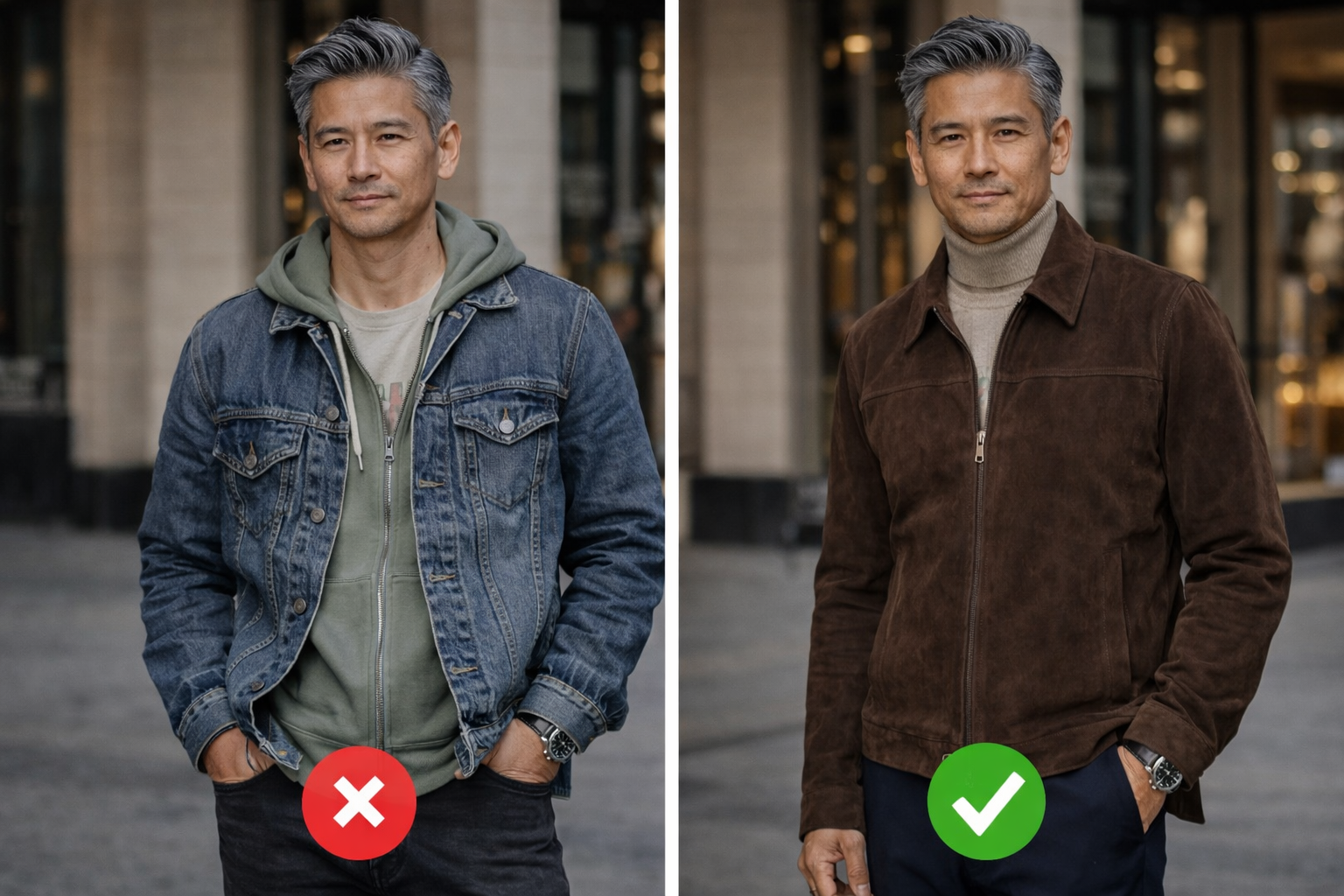
And when all three of these keys come together — when your colors are right, your fit is dialed in, and your wardrobe has a consistent direction — something significant shifts. You put something on and think: I like how I look. I like how I feel. This is me, only better.
That's when you walk into rooms differently. That's when the version of you that other people see matches the version you know yourself to be.
The Hidden Cost of Getting These Wrong
Most men are paying a cost they haven't quantified. It shows up in small ways every day.
It's the ten minutes every morning staring at a closet full of clothes, trying to figure out what to wear. It's the low-grade dissatisfaction of putting something on and feeling like it's not quite right, but wearing it anyway because you're out of options. It's the overbuying — the continued accumulation of pieces that feel like they should work but somehow don't fit into anything cohesive.
It's also the moments that matter. The pitch where you felt underdressed. The event where you were aware of what you had on in a way that pulled you out of the moment. The first impression you didn't get to control because your image didn't reflect the level you're actually operating at.
None of this is inevitable. When color, fit, and consistency are working together, all of it goes away. You stop spending mental energy on your wardrobe and start spending that energy on the things that actually move the needle in your life.
Getting All Three Right: What The Men's E.D.I.T. Does
This is exactly what gets built inside The Men's E.D.I.T. — the virtual capsule wardrobe experience for men who are ready to stop piecing it together and actually get this handled.
Together, we identify and dial in:
- What colors actually work for you — and build your wardrobe around them
- What fits and cuts work for your specific body — so everything you own is working for you
- A clear, consistent direction for your wardrobe — so you stop second-guessing and start showing up with authority
- What works in your current closet, what doesn't, what to wear where, and how it all fits together
The result is a wardrobe that feels like you — not a version of someone else's style applied to your life, but a clear, intentional expression of who you are and where you're headed.
The Founder's Rate
The Men's E.D.I.T. is currently available at a founder's rate of $2,000 — before it launches publicly at $5,000. This rate is available to a limited number of men only, and it won't last once the beta round closes.
If you're ready to stop guessing and build something that actually works, you can learn more and apply here.
One Last Thing
Here's a question worth sitting with: when was the last time you put an outfit on and thought, "this is it — this is me"?
If you have to think hard to remember, that's the signal. Not to buy more. To build smarter. To get color, fit, and consistency working together — and experience what it feels like when your wardrobe actually reflects who you are.
That feeling is available to you. And it changes more than just how you look.
About the Author
Dina Cerchione is a personal stylist for men and the founder of The Men's E.D.I.T. She helps ambitious men use the power of presence to reach their goals — through intentional wardrobes built around their real lives, not trends.